Origin: nature vs science
To truly understand what sets a diamond apart from cubic zirconia, you have to start at the very beginning — where each of them comes from. Origin defines their value, their story and even their emotional weight. One is a wonder of nature, the other an achievement of the human mind, and that duality gives both stones their own place in jewelry making.
A diamond is a genuine treasure from the Earth. Its story begins deep below the surface, under the extreme conditions of the Earth’s mantle. There, under immense pressure and at temperatures above 1,000°C (about 1,800°F), pure carbon was transformed over millions of years into the hardest known mineral. It is a slow, majestic process that makes every diamond a small piece of our planet’s geological history.
Diamond — a symbol of luxury and timeless promises
Diamonds have fascinated people for centuries, becoming a byword for power, wealth and — above all — eternal love. Their extraordinary hardness made them the perfect vessel for promises meant to stand the test of time.
They have long been regarded as the most precious of gems, which is why the diamond remains the classic choice for engagement rings.
Cubic zirconia — science’s answer to the desire for beauty
On the other side stands cubic zirconia — a 100% synthetic stone and a product of human ingenuity. Interestingly, a natural mineral form of cubic zirconium oxide does exist, but it is so rare that it plays no role in jewelry. The cubic zirconia we know from jewelry was created in the laboratory and took the market by storm in the 1970s as an excellent and, above all, affordable diamond simulant.
Cubic zirconia proves that beauty can be created. Its laboratory origin ensures exceptional clarity and a flawless look, free from natural imperfections — for many people, its greatest advantage.
How is it made? Zirconium oxide is melted at extremely high temperatures and then cooled under controlled conditions so that the material crystallizes. This technology allows large, perfectly clear stones to be mass-produced, which translates directly into their low cost. That accessibility revolutionized the market and opened up the world of sparkling jewelry to everyone.
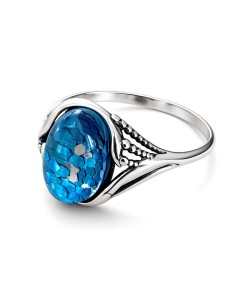
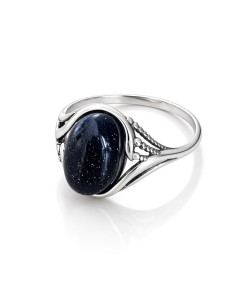
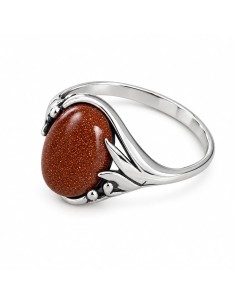
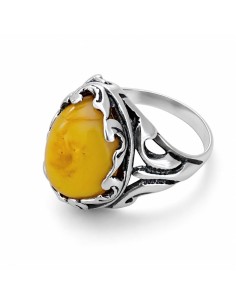
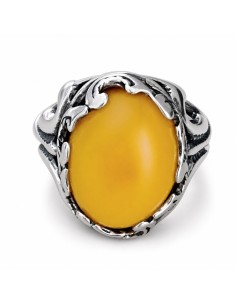
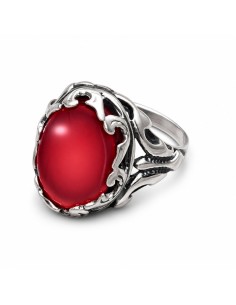
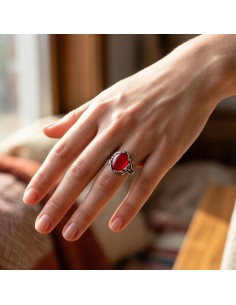
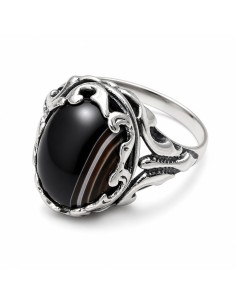
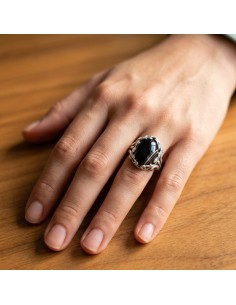
So the difference in origin is crucial. A diamond carries the Earth’s history, rarity and prestige, while cubic zirconia stands for modern technology and the democratization of luxury. Choosing between them is not only a matter of budget or looks, but also of which story you want to wear close to you. At Polcarat Design you will find jewelry set with cubic zirconia as well as with natural stones. A fine example of craftsmanship is this sterling silver ring with cubic zirconia, which shows just how beautiful a man-made stone can look.
Cubic zirconia or diamond? Physical and optical properties
When we look at jewelry, a stone’s physical and optical properties shape its character, its durability and the impression it makes. Here, the differences between a diamond and cubic zirconia are fundamental. They determine how a piece will look not only on the day you buy it, but after many years of wear.
A diamond is famous for its near-absolute hardness, while cubic zirconia, although it seems tough at first glance, inevitably shows wear over time. Combined with the completely different way the two stones handle light, these traits create two distinct aesthetics: one built on subtle elegance, the other on a bold, almost fiery sparkle.
How to tell a diamond from cubic zirconia: hardness
The most important and best-known difference is hardness. With a score of 10 on the Mohs scale, the diamond is the undisputed king — the hardest natural mineral on Earth. What does that mean in practice? Only another diamond can scratch it.
Thanks to this, diamond jewelry, even when worn every day, keeps its flawless look and crisp edges for generations. That legendary durability is what makes it the ideal choice for engagement rings and lifelong keepsakes.
Cubic zirconia scores a more modest 8–8.5 on the Mohs scale. That is still impressive — well above glass and many decorative stones — but it is not indestructible in everyday life. Over time its surface can dull from tiny scratches, and the facet edges lose their perfect sharpness.
It is worth remembering that cubic zirconia is synthetic zirconium dioxide, created as a diamond simulant and widely popular since the 1970s. Durable as it is, it will look different after years of wear, unlike a diamond. You can read more in the Wikipedia article on cubic zirconia.
Brilliance and fire: the light test
Just as important as hardness are the optical properties that decide how a stone “plays” with light. Here, a trained eye can spot the differences almost instantly.
- Refractive index (brilliance): A diamond has a very high refractive index (2.42). It bends incoming light superbly and reflects it back out, creating an intense white sparkle known as brilliance.
- Dispersion (fire): A diamond has moderate dispersion (0.044). It splits light into rainbow colors in a very subtle, elegant way. The flashes are balanced, mostly white and gray, with delicate touches of color.
Cubic zirconia, by contrast, has a slightly lower refractive index (2.15–2.18) but much higher dispersion (0.066).
In practice, this means cubic zirconia flashes with far more intense, almost fiery rainbow colors. Its sparkle is bold and colorful — eye-catching to some, and to others less natural and more “artificial” than the refined brilliance of a diamond.
Density: what else sets diamond and cubic zirconia apart
An interesting, often overlooked trait is density. Cubic zirconia is much denser than diamond — about 1.7 times heavier at the same size.
What does that change? If you hold a diamond and a cubic zirconia of identical dimensions, the latter will feel noticeably heavier. For a jeweler, this is one of the first clues for a quick identification. For you it may be a subtle difference, but it shows how fundamentally different the two materials are.
In short, physical and optical properties clearly define the character of each stone. At Polcarat Design you will find jewelry that showcases both the subtle charm of natural stones and the bold sparkle of cubic zirconia, so you can choose exactly what suits your style.