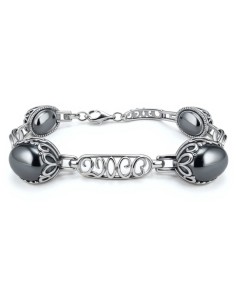
Hematite jewelry: key takeaways
| Point | Details |
|---|
| Where hematite comes from | Hematite is a mineral with a rich history, known for its symbolism and especially valued in jewelry. |
| Recognizing genuine stones | Genuine hematite can be recognized by its metallic luster and characteristic red streak — key things to know when buying. |
| Aesthetic qualities | Hematite pairs beautifully with silver and agate, creating elegant jewelry that highlights the wearer’s personality and strength. |
| Jewelry care | Proper care keeps silver hematite jewelry shining — avoid chemicals and store it in soft pouches so the stones aren’t damaged. |
Hematite in jewelry: origin and properties
Hematite is a remarkable mineral that has fascinated people for centuries with its striking look and symbolism, and hematite jewelry remains a favorite today. Its history goes back to antiquity, when it was seen as a symbol of strength and protection. Its characteristic metallic luster and deep, often dark gray or graphite color make it highly valued in the jewelry world.
Hematite’s origin is closely tied to geological processes in the Earth’s crust. It most often occurs in iron-rich rock formations and forms crystals with a hardness of 5.5–6.5 on the Mohs scale. Its distinctive feature is a reddish streak that appears when the stone is scratched across a rough surface. It can be found in various shades, from cool grays to intense reds, depending on its chemical composition and how it is processed.
In sterling silver hematite jewelry, its symbolism is especially valued. Traditionally, hematite is regarded as a soothing stone associated with focus and calm. Its deep, dark color pairs perfectly with the cool shine of silver, creating elegant, mysterious designs. Jewelers often combine hematite with agate in pieces that highlight its natural, raw character.
Pro tip: Always check whether a piece includes stones that may be sensitive to chemicals, such as moonstone. When choosing hematite jewelry, look at the quality of the stone’s finish and how it is set in silver — both directly affect the final look.
How to spot real hematite
Recognizing genuine hematite takes a closer look at its characteristic features. Authenticity matters in natural stone jewelry, and it can be judged by a few key criteria that help you tell a natural mineral from a cheap imitation. Professional collectors and jewelers look at a whole range of specific details.
The first and most important criterion is the stone’s luster and structure. Real hematite has a distinct metallic luster that differs from glassy or plastic imitations. It should feel cool and smooth to the touch and, once polished, look almost mirror-like. Another important diagnostic feature is the streak test: rubbed across unglazed porcelain, genuine hematite leaves a characteristic reddish-brown mark, which sets it apart from stones such as onyx. Keep in mind that the test can scratch a polished stone, so do it discreetly.

It’s also worth taking a look at our sterling silver hematite ring, a great example of a high-quality stone setting. Professional jewelers pay attention to weight, crystal structure and the way a stone is cut. Hematite occurs in various forms — from tiny crystals to larger nuggets — and each has slightly different characteristics. Its color can range from deep black to graphite gray, which only adds to its appeal.
Pro tip: Before buying hematite, ask the seller for an accurate description of the stone, or run basic checks such as the streak test and a luster check to avoid buying a fake.
Types of hematite and how it is used
Hematite is a remarkable mineral with a rich variety of forms and uses that fascinates collectors and jewelry designers alike. Its varieties span a wide range of geological structures, from compact, cryptocrystalline forms to spectacular crystals with a metallic luster. Each variety has its own features that make hematite such a versatile material.
The main types of hematite include red iron ore, specular hematite, stalactitic forms and the rounded, grape-like masses known as kidney ore. Especially interesting are iron roses — rosette-shaped clusters of flat crystals with a striking structure. Sterling silver hematite earrings show how beautifully this stone can be used in jewelry, creating elegant and intriguing designs.
Beyond jewelry, hematite is used in many fields. It serves as a pigment in the paint industry, as a source of iron in metallurgy and as a stone in meditation and spiritual practices. Its durability and striking metallic luster make it ideal for bracelets, necklaces, rings and other pieces. Artists and craftspeople value it for the visual effects it creates, combining the raw nature of the stone with precise workmanship.
Below is a comparison of the main types of hematite used in jewelry:
| Type of hematite | Appearance | Special features | Typical jewelry |
|---|
| Red iron ore | Matte red | Iron-rich, durable | Necklaces, rings |
| Specular hematite | Metallic luster | Reflects light, striking | Pendants, earrings |
| Stalactitic hematite | Dark, grape-like clusters | Unusual shapes | Brooches, pendants and rings, often paired with lapis lazuli |
| Iron rose | Rosette structure | Layered build, decorative | Decorative brooches |
Pro tip: When choosing hematite, look at its natural structure and luster, which determine the stone’s authenticity and value.
Hematite meaning: what it symbolizes for the wearer
Hematite is not just a beautiful stone but also a meaningful companion for women who value harmony between aesthetics and symbolism. In tradition, the energy of the stone reaches far beyond its looks: hematite is said to act as a kind of invisible shield that accompanies a woman through everyday challenges. For many modern women, it is more than an accessory — it is an expression of inner strength, resilience and conscious choice.
The psychological side of wearing hematite is tied to its traditional association with focus and emotional calm. Women who choose hematite bracelets are often looking not only for an elegant accessory but also for a symbol of calm and composure. The stone symbolizes stability and balance and is traditionally seen as a talisman for moments that call for calm and thoughtful decisions.
Hematite also has a purely aesthetic role, working with outfits from business to evening wear. Its dark, metallic color adds character and expression, highlighting a woman’s individuality. Its symbolism is also linked to courage, inner strength and the ability to go beyond one’s limits, which makes it a great companion for women consciously building their identity and confidence.
Pro tip: When choosing jewelry with hematite or apatite, look not only at its appearance but also at how the design resonates with your personality and current needs — especially if you see it as an amulet.
How to care for sterling silver hematite jewelry
Silver and hematite need special care and gentle handling to keep their natural shine and beauty for years. Proper care isn’t complicated, but it does take regularity and the right cleaning and storage techniques. Every piece of jewelry, especially one made of such fine materials, deserves care that preserves its original look and value.
The basic rules for cleaning silver hematite jewelry involve a few key steps. Above all, avoid harsh chemicals, which can damage the delicate surface of both the stone and the silver. After each wear, gently wipe your sterling silver bracelet with a soft, lint-free cloth to remove sweat, dust and dirt. For deeper cleaning, use special products designed for silver jewelry, which remove tarnish and restore shine without risking damage to the stone.
Everyday care
Caring for Hematite Jewelry
Cleaning
- Wipe with a soft, lint-free cloth after each wear
- Avoid harsh chemicals
- For deeper cleaning, use products made for silver
Storage
- Keep each piece in its own pouch or box
- Keep it away from moisture
- Avoid strong sunlight and high temperatures
Care regularly, and check the stone settings from time to time.
Storing hematite jewelry needs just as much care. It’s best kept in separate soft pouches or jewelry boxes with compartments to prevent scratches and chips. Despite its hardness, hematite can be damaged by accidental contact with other, harder materials. Also remember to keep your jewelry away from strong direct sunlight, high temperatures and moisture, which can affect its look and condition.
Here is a summary of the most common mistakes in caring for silver hematite jewelry and how to avoid them:
| Care mistake | Consequences | Recommended action |
|---|
| Using harsh chemicals | Dulling or damage to the stone | Use gentle silver-care products |
| Storing jewelry loose | Scratches, cracks and other damage | Store in soft pouches |
| Exposure to moisture | Corrosion, loss of luster | Keep away from moisture |
| Skipping setting checks | Risk of losing a stone | Check the settings regularly |
Pro tip: Before each cleaning, check your jewelry, paying special attention to stone settings and any cracks, to avoid accidental damage.