Can You Wear Jewelry in a Pool or Sauna? Why It’s Best to Take It Off

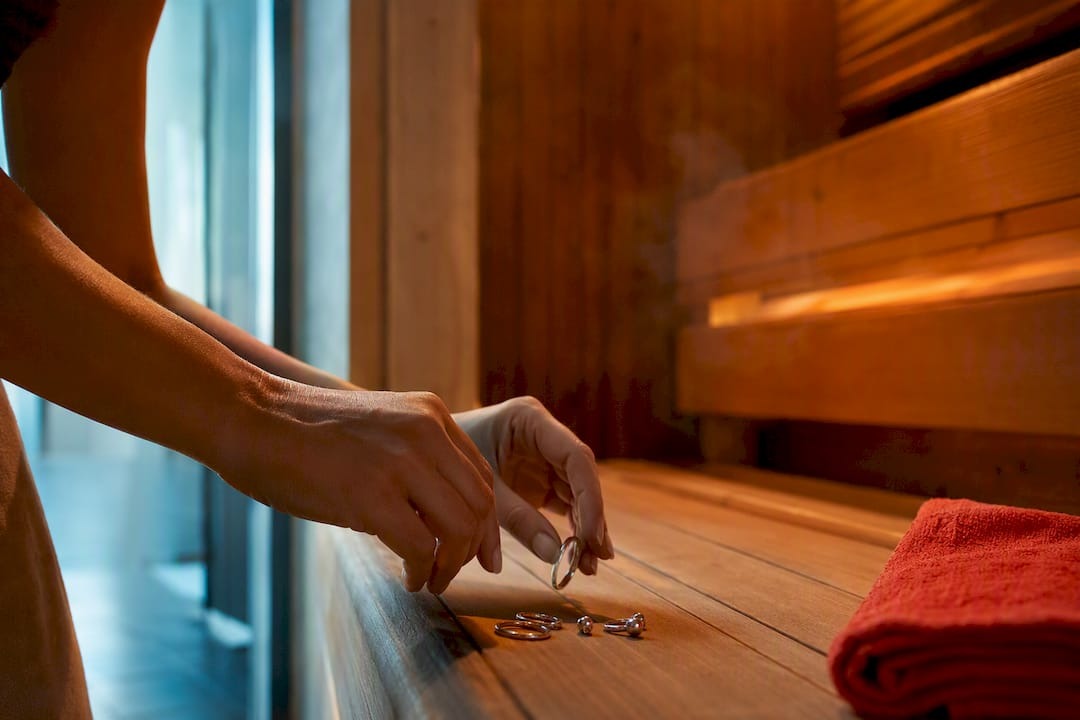
Can you wear jewelry in a pool or a sauna? It’s better not to — take it off before you go in. Metal heats up quickly and can burn your skin, chlorine damages plating and weakens gold alloys, and water and movement make it easy to lose a ring or an earring. Those are three good reasons to leave your jewelry in the locker room before moving on to the practical protective steps below.


In short: caring for your jewelry is the key to making it last.

  • Take your jewelry off before entering a pool or sauna to avoid burns, damage to plating and losing pieces on slippery surfaces — and keep it away from salt water, too.
  • Chlorinated pool water speeds up the tarnishing of gold-plated jewelry and the wear of plating, and it can cause corrosion in gold alloys, especially those containing copper and silver.
  • Different jewelry materials react differently to water and high temperatures; organic gems and pearls are the most sensitive to chemicals and heat.
  • Rinse and dry your jewelry as soon as you get out of the water, and if you notice a loose stone, see a jeweler right away.
  • Everyday habits, such as using a closed jewelry case and avoiding damp cosmetic bags, extend the life of your jewelry — plated pieces especially — and help keep it looking good.

Can you wear jewelry in a pool or sauna? How the damage happens

Saunas usually run at temperatures high enough to make metal heat up in no time. In those conditions, a ring or an earring can burn your skin before you have time to react. Sauna etiquette guides commonly recommend taking jewelry off before going in for exactly this reason, and in sauna culture it has long been treated as a given rather than a suggestion.

Pool water works differently but is just as damaging, mainly because of the chemicals in it. Chlorine speeds up tarnishing and the wear of finishes such as rhodium or gold plating, and with prolonged contact it can lead to stress corrosion in gold alloys. In this process, microcracks in the metal’s structure grow under the influence of chemicals, which can eventually make a ring shank crack suddenly. Jewelry experts stress that the culprit isn’t gold itself but the other metals in the alloy, such as copper or silver, which react with chlorinated water much faster than the pure metal.

Then there’s the purely mechanical factor. Moving water, hands slippery from oil treatments, sand around outdoor pools — all of this encourages stone settings to loosen and jewelry to go missing. In spa settings, wedding bands and engagement rings are the pieces that most often disappear, because fingers swell in the heat and metal gets slippery.

There’s also a hygiene aspect that gets mentioned less often:

  • jewelry collects bacteria and cosmetic residue in pool and sauna areas,
  • closed stone settings hold on to moisture and chlorine much longer than smooth skin does,
  • sauna house rules often ask guests not only to remove jewelry but also to wash and dry off thoroughly before going in.

Regular swimming and sauna sessions over several months can noticeably change the look of your jewelry — plating wears off, stones loosen and the metal loses its shine. It’s not a one-evening risk but a cumulative effect that only shows over time.

How different materials react to pools and saunas — what not to wear

Not all jewelry reacts the same way to chlorine, water, high temperatures or perfume. Knowing the material helps you judge how much you’re actually risking if you forget to take a particular piece off.

  • Gold — the karat and alloy composition are what matter. Pure gold is resistant in itself, but the copper or silver found in most jewelry alloys reacts with chlorine and can lead to the stress corrosion described above.
  • Silver — darkens and dulls in chlorinated water and seawater much faster than gold. The effect can show after a single long soak in warm water.
  • Surgical steel (316L) — handles pool chemicals surprisingly well because it’s designed to resist corrosion. It doesn’t protect against knocks, scratches or catching on the edge of the pool, though.
  • Plating — gold plating and rhodium plating are layers just micrometers thick, and they wear away quickly in contact with chlorinated water and the rough surfaces of a hot tub.
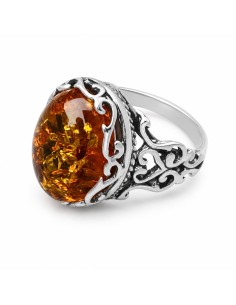
  • Pearls and organic gems — the most sensitive category of all. Pearls are porous, so chlorine and high heat can permanently change their color and luster, and amber and coral react just as badly to chemicals.

Pro tip: clean your jewelry regularly to keep it shining, especially after contact with water and soap. If you’re not sure what alloy your jewelry is made of, treat it as if it were the most sensitive kind. Taking it off for the pool or sauna takes a few seconds and spares you damage that can’t be undone.

How to protect your jewelry before and after the pool or sauna

Protecting your jewelry doesn’t take complicated rituals — just a few habits done in the right order.

  1. Before you go in — take off all rings, earrings, bracelets and chains while you’re still in the locker room. Don’t leave them on a bench, the edge of the pool or a towel; those are the most common places where jewelry simply vanishes.
  2. Put it in a closed case — a small, hard box in your gym bag protects far better than a cosmetic bag pocket or a piece of clothing wrapped around it.
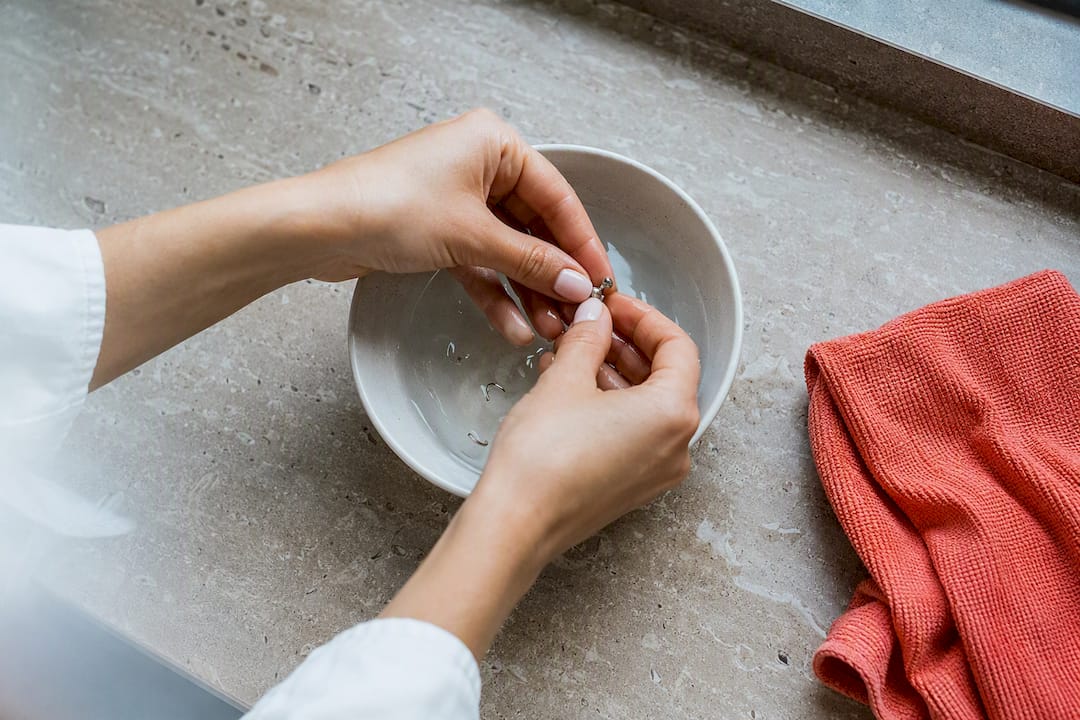
  3. Rinse your jewelry under running water after swimming — do it right away, before the chlorine dries on the metal and stones.
  4. Dry it with a soft cloth — avoid rubbing with a rough towel, which can loosen settings further; use a polishing cloth instead.
  5. Check the stone settings — gently try to move each stone with your fingertip. If it moves, that’s a sign a visit to the jeweler shouldn’t wait.

Sometimes people go into the water wearing a wedding band because taking it off seems impractical, especially when their fingers are already slightly swollen from the heat. In that case, keep contact with chlorinated water to a minimum and rinse the ring in warm, soapy water as soon as you get out of the pool.

If you forgot to take your jewelry off and only noticed once you were in the water, don’t panic. Take it off, rinse it with lukewarm clean water and dry it thoroughly with a soft cloth, ideally right after leaving the pool. A one-time contact with chlorine is rarely catastrophic, as long as you act quickly afterward.

Rinsing jewelry with clean water after swimming in a pool

Pro tip: If after swimming you notice a loose stone setting or your silver jewelry looks different than usual, don’t put off a visit to the jeweler. An early check costs less than repairing a cracked ring shank.

You’ll find more about general safety rules in pool areas in this guide to swimming pool safety.

Everyday habits that protect your jewelry

The biggest damage doesn’t come from a single accident but from small, repeated lapses, often involving contact with chemicals. A few simple habits can change that.

  • Keep a small, closed jewelry box permanently in your pool or sauna bag instead of improvising every time.
  • Take your jewelry off as soon as you enter the locker room, before showering — not “just before getting into the water.”
  • Don’t put jewelry in damp cosmetic bags; moisture and chemicals from cosmetics speed up tarnishing even more.
  • Store delicate gems such as pearls or amber separately, so they don’t rub against harder pieces.

Another good idea is to treat a jewelry box — even the one your jewelry came in — as a permanent part of your gym bag, not something you only use on special occasions.

Perspective: beauty and protection can go hand in hand — how to store your jewelry

Many people wear their wedding band nonstop and treat taking it off as almost disloyal to the relationship. That way of thinking costs real money and emotions when a ring disappears into a pool filter or cracks after years of invisible corrosion.

Protecting the sentimental value of your jewelry starts with a simple habit: take it off, put it away, check it — and keep it away from chemicals. A checkup at the jeweler’s once every year or two catches weakened settings before they become a problem, and restoration can often bring even heavily worn jewelry back to its former look.

Everyday jewelry that lasts more than one summer

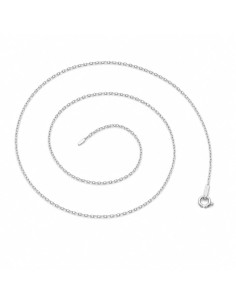
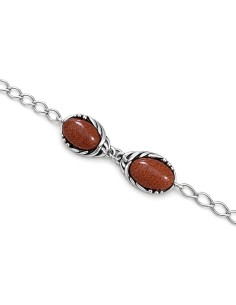
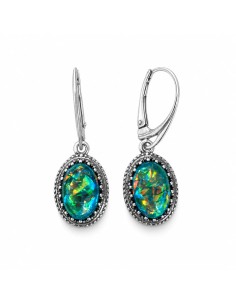
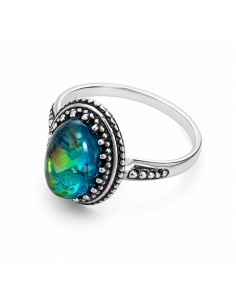
Polcarat Design makes jewelry from 925 sterling silver, which, with proper care, stands up to everyday wear better than thin plated finishes. Instead of openwork settings, which are easier to snag and damage, consider smooth, solid designs such as a sterling silver Singapore chain or a sterling silver bracelet with crystals — pieces that keep their character even after years of wear.

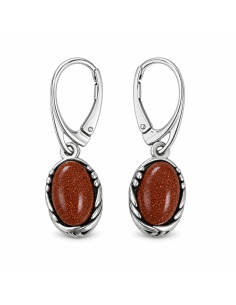
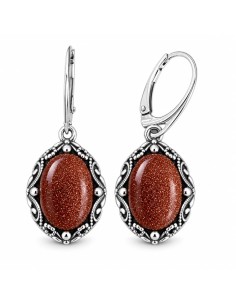
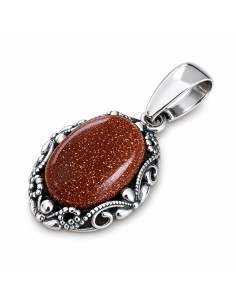
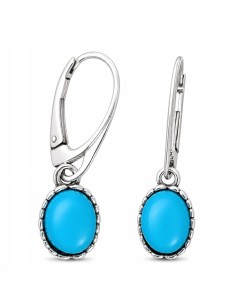
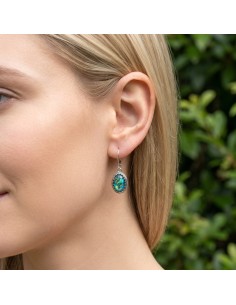
You’ll also find sterling silver earrings and our whole sterling silver jewelry collection to browse, so you can choose a design that suits your lifestyle, not just a single occasion. If you’re looking for jewelry you can put on in the morning and take off in the evening without a second thought, browse the categories at Polcarat Design and choose a piece designed for everyday wear.

Useful sources and guidelines

You’ll find sauna safety rules in the guidelines of sauna associations and in the house rules of individual saunas and spas. The effect of chlorine on gold and silver alloys is described in trade articles by jewelers who specialize in jewelry care.

Silver, water and moisture — frequently asked questions

Can you wear jewelry in a sauna?

You shouldn’t. Metal heats up very quickly in a sauna and can burn your skin, which is why sauna etiquette calls for removing all jewelry before you go in.

Do you have to take off jewelry at the airport?

Yes, if it contains a lot of metal and sets off the metal detectors at security — although that’s a practical matter, not about protecting the jewelry itself. Small pieces usually aren’t a problem, but it’s worth taking off larger rings or watches beforehand to speed up the check.

Does a sauna remove heavy metals?

That question has nothing to do with jewelry. Taking off jewelry before a sauna is about the risk of burns from hot metal, not about any kind of detox process.

Can you swim in gold-plated jewelry?

It’s better not to. Gold plating is thin and wears off under chlorine and friction much faster than solid silver or surgical steel, so even a short swim can affect its look. If you’re looking for something more durable for everyday wear, choose Polcarat Design sterling silver jewelry instead of plated designs.

  • Sterling silver set with synthetic opal — earrings and pendant
  • Sterling silver Singapore chain, 50 cm (about 20 in)
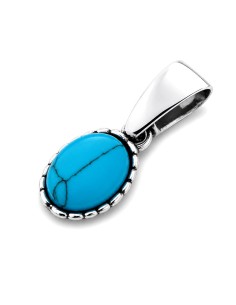
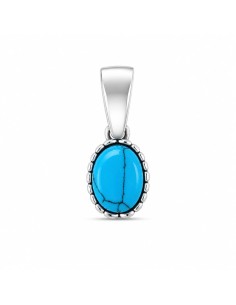
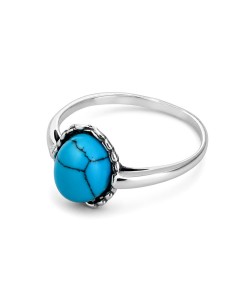
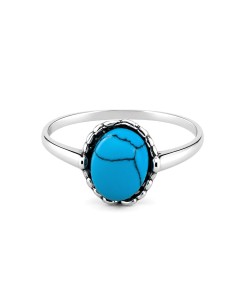
  • Sterling silver turquoise set — earrings and pendant, KPL 4107
  • Sterling silver Swarovski set KPL 1090 — necklace and earrings

Comments (0)
No comments at this moment
Product added to wishlist