- Silver Jewelry Tips
- 0 likes
- 125 views
- 0 comments
- stud earrings, earring backs, earrings that don’t snag, winter earrings, lever-back earrings, earrings with scarves, how to wear earrings in winter
In short: earrings catch in winter because scarves, hats and turtlenecks slide over your ears, and any part of an earring that sticks out becomes a trap for fibers. Small earrings are the safest: studs and short lever-back styles. Before you go out, do a one-minute test: put your hat on and take it off, pull your scarf over your head — if nothing caught, you’re good to go.
Earrings that don’t snag on scarves and hats are styles that sit close to the ear and have no gaps where wool can get in. In winter that matters more than you might think: thick knits, acrylic and fleece stretch, slip and rub against the ear with every turn of your head. In this guide we explain why earrings snag, which backs work best in the colder months and how to check your earrings at home in a minute.
Why do earrings snag on hats, scarves and turtlenecks?
Fabric slides over your ear, and if an earring that sticks out from the earlobe is in its way, the fibers easily tangle around its edges. The parts most likely to catch are those with gaps, openings or loose ends:
- open ear wires and hooks — yarn slips between the wire and the decoration,
- long dangles — they swing and catch every loose stitch,
- heavy earrings — they hang low and rub against a turtleneck collar,
- openwork designs with tiny holes — fibrous fabric works its way into them,
- sharp or rough edges — single threads catch on them.
You know the typical situations from everyday life: you pull your scarf over your head and feel a tug, you adjust your hat and the earring moves with it, you fold down your turtleneck and hear the closure click quietly. Weight matters, too — a heavy earring pulls on the earlobe harder than a light stud, so a snag can be not only annoying but painful.
Which backs and styles make earrings that don’t snag?
If you want to wear earrings comfortably under a hat and with a scarf, choose low-profile, closed styles. The fewer gaps there are and the closer the decoration sits to your ear, the fewer chances there are for something to catch.
Winter earrings
Two Backs That Don’t Snag in Winter
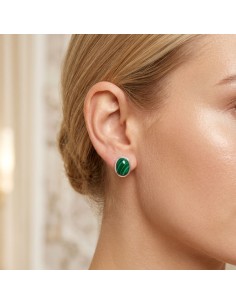
Stud
- Sits flat against the earlobe
- Your scarf and hat have nothing to catch on
- Handles the friction of a hat with ease
- Example: KST 1194
Lever-back
- A closed hinged mechanism with no protruding hook
- Won’t open when you take off your hat
- In short styles the decoration stays close to the ear
- Example: K3 1161
- Studs: they sit flat against the earlobe, have nothing to catch on and handle the friction of a hat with ease. They’re the simplest choice for days when you wear several layers.
- Lever-backs: a closed hinged mechanism that doesn’t open by accident and has no protruding hook. In short earrings the decoration stays close to the ear, so your scarf slides right over it.
- Small huggie hoops: they hug the earlobe tightly, so fabric glides over the smooth surface instead of tangling in it.
What should you avoid in your winter wardrobe? Long dangling earrings and open ear wires, which easily catch fibers. Pay attention to the finish, too: smooth edges, a polished surface and a secure connection between the decoration and the closure. 925 sterling silver can be polished very smooth, and in our workshop we finish our earrings by hand.
Tip: run your finger over the earring from every side. If you can feel even a slight unevenness, winter wool will find it, too.
Cheat sheet: earring backs and snag risk
| Earring type | How it behaves under a hat and scarf | Snag risk |
|---|---|---|
| Stud | sits flat against the earlobe, no gaps | low |
| Short lever-back earring | closed mechanism, decoration close to the ear | low |
| Small huggie hoop | smooth surface, fabric slides off | low |
| Openwork design with tiny holes | fibers can work their way into the openings | medium |
| Open ear wire (hook) | yarn slips between the wire and the decoration | high |
| Long drop earring | swings and rubs against the collar | high |
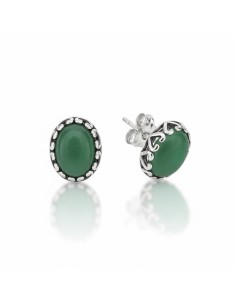
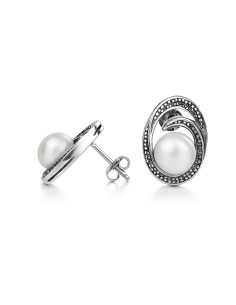
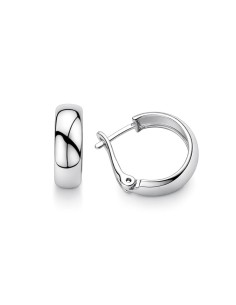
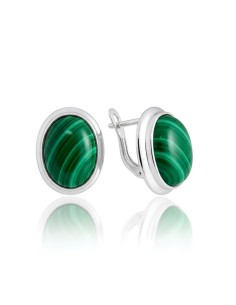
Below are a few short styles from our workshop — studs and lever-back earrings in 925 sterling silver.
How to choose earring length, profile and weight for winter clothes
Choosing doesn’t have to be guesswork. A few simple steps in front of the mirror are enough:
- Check the fabric line. Put on your favorite scarf or turtleneck and see where the fabric ends relative to your earlobe. An earring that hangs below that line will rub against the fabric.
- Assess the length. In winter it’s better to choose styles that don’t hang lower than the bottom edge of your ear — longer ones catch on the collar.
- Consider the weight. An earring that stretches your earlobe after an hour of wear will be even less comfortable with thick clothes.
- Look at the back profile. Flat backs and a small decoration are safer than raised elements that catch on a hat.
Concrete numbers help. Our KST series studs measure about 1.1 cm (0.43 in) and weigh about 2.5 g, while the short lever-back earrings from the K3 series usually measure 1.4–1.7 cm (0.55–0.67 in). These dimensions fit on the earlobe and don’t reach the collar.
How to wear a scarf and hat so they don’t pull on your earrings
Sometimes the problem isn’t the earring but the way we put on our accessories. A few small changes in habit make a big difference:
- Tie your scarf under your chin or loosely around your neck, instead of pulling it up high by your ears. Less fabric near the ear means less friction.
- Put your hat on from front to back, lifting the edge over your ear and then gently easing it into place. That way it won’t slide over the earring.
- When taking off your scarf, first move the fabric away from your ear, and only then pull it over your head.
- If an earring does catch, don’t yank. Stop moving, hold the earring with your fingers and gently free the fibers. For more on handling an earring safely, see this guide to removing an earring.
- Silicone backs are worth keeping handy for a longer walk on a windy day — they also help keep studs stable.
If you wear a coat that buttons up to the neck in winter, take a look at our guide on how to choose jewelry for a trench coat or fall coat — with a high collar, earrings play the leading role.
An at-home test: how to check your earrings before you go out
You don’t need any special tools — just your winter things and a minute. Put on your earrings and check them in three situations:
- Hat: put it on and take it off two or three times, watching the edge over your ear.
- Scarf pulled over your head: ideally a wool one, since it’s the most likely to catch protruding parts.
- Turtleneck with a high collar: turn your head from side to side and fold down the collar.
If the earring didn’t catch even once, it’s ready for the cold. If something snagged, save that pair for hat-free days or put it on once you’re somewhere warm indoors.
Tip: a closed back and a low profile are the two features that do the most to prevent snagging.
Which other winter jewelry works besides earrings?
Winter jewelry has to be comfortable under thick sweaters and warm coats while still making a clear statement. In fall and winter we wear turtlenecks, scarves and heavy outerwear, so it’s worth starting with what will actually show from under your clothes. You’ll know some of these rules from fall outfits — in the colder months they simply matter even more.
- Necklace: long necklaces with a pendant on a long chain, worn over the top, go best with wool sweaters and create a lovely elongating line. A short dainty necklace or a choker will get lost under a turtleneck but looks great with a V-neck sweater.
- Bracelet: choose flat, close-fitting styles with a secure clasp and no sharp edges — they won’t catch on a coat sleeve or gloves.
- Ring: in winter, a smooth, minimalist ring works better than a chunky one with a raised stone that gets in the way when you put on gloves.
- Brooches: an underrated winter accessory — a brooch pinned to a coat or scarf adds an accent exactly where the eye goes.
On colder days, warm stone shades look great — amber, garnet or red coral — while for evenings and New Year’s Eve, jewelry with crystals and cubic zirconia brightens dark fabrics. Pearls go well with light sweaters, adding lightness and elegance to winter outfits. Winter jewelry trends also love texture: oxidized silver and matte metals contrast beautifully with chunky knits, and motifs such as snowflakes work well over the holidays.
Whether you prefer minimalist gold and silver jewelry or bold, chunky shapes, the key is matching it to what you wear most often. In winter, jewelry should work with your clothes — then it’s easy to wear every day without snagging or constant adjusting, and your winter outfits gain a cohesive character.
Winter earrings from the Polcarat Design workshop
Since 1984, our family workshop in Rumia, Poland, has been making 925 sterling silver jewelry that is cast and then finished by hand. Besides earrings, you’ll find necklaces, bracelets, rings and brooches — sterling silver pieces that work well as winter accessories. Many of our earrings have stud or lever-back closures, and our product descriptions list weight and dimensions, so it’s easy to judge how a pair will behave under a hat. You’ll find the full selection in the sterling silver earrings category. If you have questions about a specific design, write to us — we’re happy to help.
Frequently asked questions
Why do earrings snag on a winter scarf?
Scarf fabric slides over your ear and catches protruding parts of the earring, such as open ear wires or long dangles. The looser the knit and the more the earring sticks out, the easier it is to snag. Styles that sit close to the ear are the safest.
Which earring backs are best in winter?
Studs, short lever-back earrings and small huggie hoops work best. They have a low profile and a closed construction, so fabric has nothing to catch on. Avoid open ear wires and long dangling earrings.
How can I check at home whether my earrings snag on a hat?
Put on your earrings, then your hat, and take it off two or three times. Repeat with a scarf pulled over your head and with a turtleneck. If the earring didn’t catch even once, you can wear it in winter with confidence.
Are heavy earrings a bad choice for winter?
Heavy earrings hang lower and rub against a turtleneck collar or scarf more often, and when they catch, they pull harder on the earlobe. In winter, light, short styles are more comfortable.
Can you wear drop earrings in winter?
Yes — ideally when you’re not wearing a hat or a scarf pulled over your head, for example with a coat that leaves your neck uncovered or when you’re somewhere warm indoors. For everyday wear under a hat, studs and short lever-back earrings are safer.
Comments (0)