In short: the most popular types of earring backs and closures are posts with a back (butterfly or screw back), open and closed ear wires, lever backs, hoop closures (wire-and-tube, snap and hinged) and clip-ons. For small everyday studs, a post with a butterfly back is enough; for heavier drop earrings, choose a lever back; and if your ears aren’t pierced, go for clip-ons. Before you buy, always look at a photo of the back of the earring, because closure names aren’t used consistently.

The closure is the smallest part of an earring, yet it largely decides whether you’ll love a pair for years or put it in a drawer after the first evening. It determines whether the earring stays securely in place, doesn’t pinch your earlobe and doesn’t catch on your hair or scarf. You’ll find the same types of earring backs on both silver and gold earrings, and the right one depends on the kind of earring. Below we explain how each type of closure works, how to recognize it from a photo and which to choose for specific earring styles — including when the jewelry is meant as a gift.

What are earring backs called? The basic types of earring backs

Jewelry terminology can be confusing, so let’s start with the names. The part of the earring that goes through the hole in your ear is either a post (also called a pin or stem) or an ear wire, a curved wire shaped like a hook. The piece that secures the post from behind is the back — in stores you’ll also see it called a butterfly back, push back or friction back. All of these names describe a small metal back with spring-loaded curls that grip the post.

The trouble is that one name is sometimes used for different mechanisms. A good example is the word “French”: a French wire is a simple hook, while a French clip is a hinged back on a post. Some sellers use these terms interchangeably, others keep them clearly apart. That’s why, instead of relying on the name alone, you should look at a photo of the back of the earring. You’ll see right away whether you’re dealing with a simple post, a hook, a lever or a hinge.

Post earrings: studs and their backs

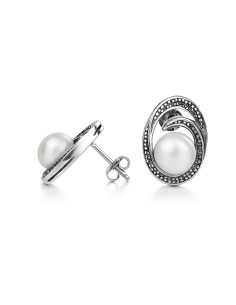
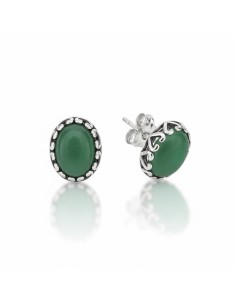
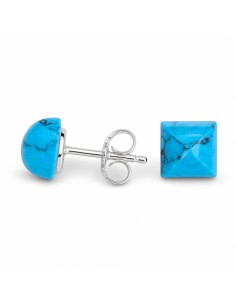
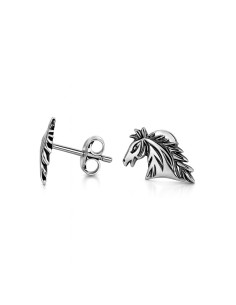
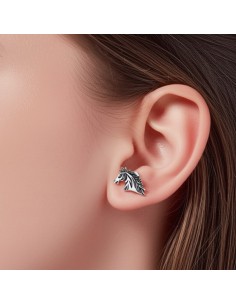
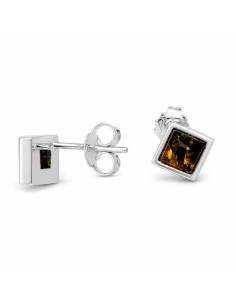
A post is a simple metal pin attached to the back of the earring. You pass it through your earlobe and secure it from behind with a back. From the front, you see only the decorative part — a stone, a bead or a flower — and from behind, a short post and a small back. It’s the most popular type of closure and the first choice for studs, the small earrings that sit close to the ear.

Post with a butterfly back (push back)

The classic. A butterfly back is a small metal piece with two curled springs that grip a smooth post. Slide it onto the post until you feel slight resistance, and the earring stays put. It’s quick to put on, even without a mirror. The weakness? Over time the springs loosen and the risk of losing an earring grows — for example, when you pull off a sweater. Keeping a spare pair of backs in your jewelry box is a good habit.

Screw back

In this version, the post is threaded and the back screws onto it like a nut. Fastening takes a few seconds longer, but the back won’t slip off on its own. It’s a good choice for valuable earrings, pairs you wear around the clock and children’s earrings, because a little one will find it hard to unscrew by accident.

Silicone and disc backs

Besides metal butterfly backs, you’ll find silicone backs and metal backs with a silicone disc. They hold by friction, are soft and comfortable for longer wear, and a wider disc supports a heavier earring so it doesn’t tip forward.

Ear wires: open hooks, closed ear wires and lever backs

Ear wire earrings are a classic for drop and dangle styles. An ear wire is a curved wire you pass through the hole in your ear, with the decorative part hanging below the lobe — earrings like these go on in seconds. The variants differ in whether and how the end of the wire is secured.

Open ear wire (French hook)

A plain hook with no extra closure. It stays in the ear thanks to its shape and the weight of the earring pulling it down. It’s light, nearly invisible and the fastest to put on. It works well for light earrings with a single stone or a delicate charm. For heavier designs and active days, it’s worth adding a small silicone stopper to the end of the wire.

Closed ear wire

It looks like an open hook but has a small loop near the decorative part (one common version is called a kidney wire). After passing it through your ear, you hook the end of the wire into the loop and the earring closes into a ring. Fastening takes a little precision, but the earring won’t slip out if you move your head suddenly.

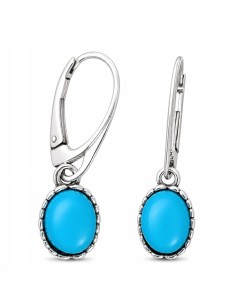
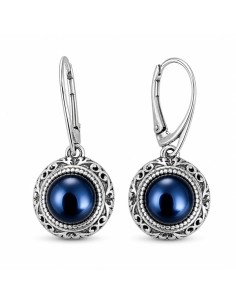
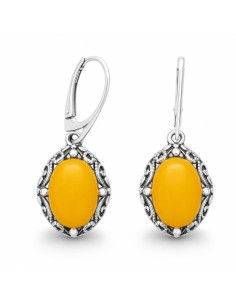
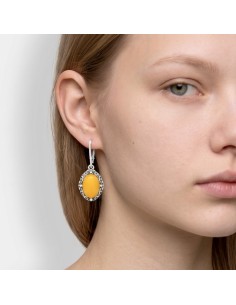
Lever back — the classic secure closure

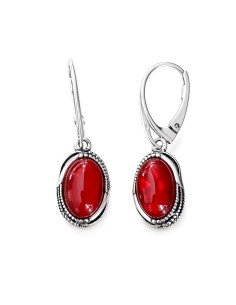
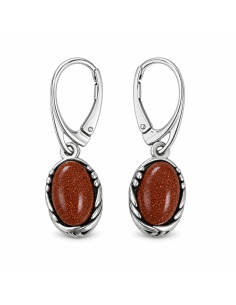
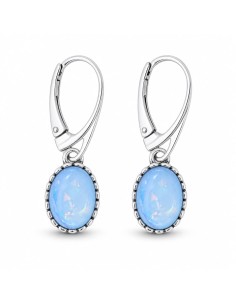
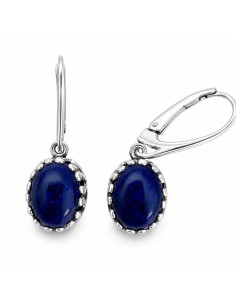
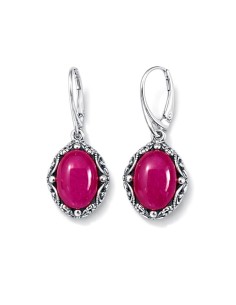
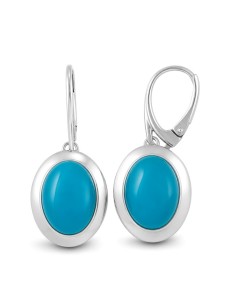
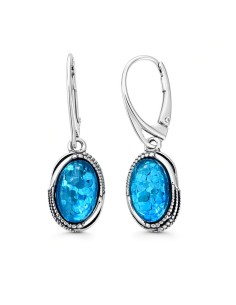
Considered by many jewelers to be one of the most secure closures. At the back, there’s a movable hinged lever that you close from below after passing the wire through — you’ll hear and feel a gentle click. The lever locks the wire, so the earring sits steadily and doesn’t shift in your ear. We use this closure on many of our drop earrings with stones, because it holds a heavier earring securely and works beautifully for evenings out.

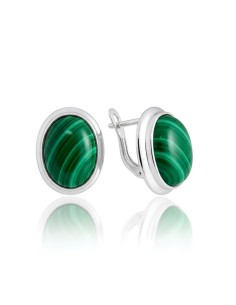
Omega back (lyre-shaped clip)

A variation on the hinged closure in which the movable back piece is an arch shaped like a lyre or the Greek letter omega and clicks into a groove at the end of the post. The closure hides behind the earlobe, so only the decorative part shows from the front.

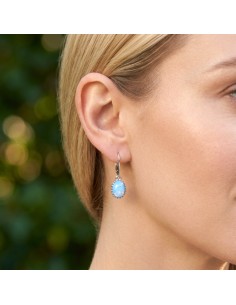
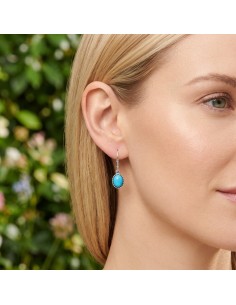
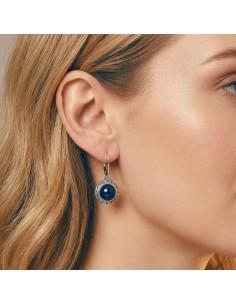
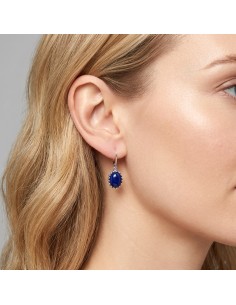
Below are lever-back earrings from our workshop — 925 sterling silver with stones that stay securely in place.

Hoop earrings: wire-and-tube, snap and hinged closures

Hoop earrings — from tiny huggies to wide hoops — have their own family of closures:

  • Wire-and-tube (classic hoop closure). A thin wire at one end of the hoop slides into a tube at the other end. It’s light and discreet, good for thin hoops, but takes a little practice.
  • Snap closure (“click-top”). A post snaps into a socket at the other end of the hoop. Fastening is quick and you can feel the click — a convenient option for hoops worn every day.
  • Hinged closure. Part of the hoop swings open on a hinge and closes into a catch. You’ll find it on wider hoops and on small huggies that hug the earlobe — the hoop keeps a continuous, smooth shape.

With hoops, pay attention to diameter and weight. Large, chunky hoops look striking, but they can tire your earlobe over a full day of wear.

Threader earrings, ear cuffs and clip-on earrings

Threader earrings (chain earrings) are a thin chain with a post or needle at one end that you thread through the hole in your ear. They often have no closure and stay in place thanks to the weight of both ends — they look modern but can slip out with quick movements.

Ear cuffs wrap around the cartilage of the ear and usually don’t require a piercing. They’re a fun addition to a look with several earrings.

Clip-ons, or clip-on earrings, grip the earlobe with a spring or a hinge with adjustable pressure. They’re an alternative to pierced earrings for people whose ears aren’t pierced or who don’t want to pierce them. Too much pressure starts to hurt after a few hours, and too little risks losing the earring, so light designs work best. Some of our designs can be switched to clip-on closures — you’ll find this information in the product description.

Types of earring backs compared: which closure for which earring?

ClosureBest forSecurityWatch out for
Post with butterfly backstuds, small post earringsgoodthe back loosens over time
Screw backvaluable studs, children’s earringsvery goodthe thread needs cleaning
Open ear wirelight drop earringsmoderateadd a stopper for heavier pairs
Closed ear wiremedium-weight drop earringsgoodhooking the loop takes precision
Lever backlarger drop earrings, evening wearvery gooddon’t force the lever open
Wire-and-tube hoopsthin hoopsmoderatethe wire must go deep into the tube
Snap and hinged hoopseveryday hoopsgoodplay in the hinge is a sign of wear
Clip-onsunpierced earsmoderatepressure neither too strong nor too weak

How to choose an earring back

There’s no single best closure for everyone — there are many types of earring backs, and the best one depends on the specific earring and on your day. Earrings with stones are usually heavier, so they need a more secure mechanism. When choosing earrings, ask yourself a few questions:

  • How heavy is the earring? For light designs, a butterfly back or an open ear wire is enough. Pair heavier earrings with stones with a screw back, a closed ear wire or a lever back.
  • How often will you wear it? Everyday earrings should have a closure that’s comfortable for hours of wear and doesn’t pinch the earlobe.
  • Where will you wear it? At a wedding or a family celebration, with lots of hugging and dancing, a closure that locks with a “click” gives you peace of mind.
  • Do you wear scarves, turtlenecks and your hair down? The protruding ends of open ear wires can snag on knits, so closed closures work better. We cover this in more detail in our guide earrings for scarves and hats: the best closures for winter.
  • Do tiny backs give you trouble? Choose lever backs or snap hoops — they fasten in one move, often without a mirror.

When you’re buying earrings as a gift

Start by finding out whether the person has pierced ears, and notice what earrings they wear every day — the closure on their favorite pair is the best clue. If in doubt, go for versatile closures: a post with a good back for studs, or a lever back for drop earrings. For a mom or grandmother, ease of fastening can matter more than design details.

Earring backs and sensitive skin

Posts and ear wires pass through the skin, so the metal matters too — the 925 sterling silver alloy we use contains no nickel. Everyone’s skin is different, though: if your earlobe turns red or itchy after you put on earrings, take them off and see a dermatologist.

How to care for earring backs so you don’t lose an earring

  • Check for play. If a butterfly back slides off too easily or a lever back doesn’t close with a clear click, the mechanism needs attention.
  • Adjust the grip gently. You can carefully squeeze the springs of a butterfly back with your fingers — no tools needed.
  • Clean the mechanisms. Threads and springs collect residue from cosmetics and dust. Wipe them with a soft cloth.
  • Take earrings off before sleeping, bathing, swimming and sports. This protects both the closure and the stones.
  • Store them in pairs, in a jewelry box with compartments, together with a spare pair of backs.

If an earring that matters to you has a damaged hinge or snap, take it to a jeweler — repairing a closure is usually simpler than finding a new pair.

Earrings from the Polcarat Design workshop — closures that wear well

At our family workshop in Rumia, Poland, we’ve been making 925 sterling silver jewelry since 1984. Our pieces are cast and then hand-finished — closures are fitted and stones set by hand — and for us the closure is never an afterthought. For every design, we look at three things: how much the earring weighs, how it should look from the front and how long it will be worn. That’s why our drop earrings with stones often have lever backs, while small studs come with a post and back. You’ll find all our designs in the silver earrings category, and if you prefer a warmer tone, browse our gold-plated jewelry. Have a question about the closure on a specific design? Get in touch before you order.

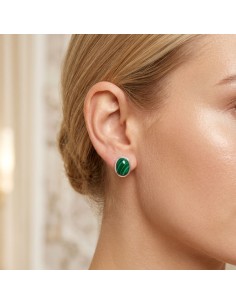
Below are smaller everyday earrings, including post designs.

FAQ: types of earring backs

What is the most secure type of earring back?

Closures that lock mechanically are considered the most secure: lever backs, omega backs and screw backs. Screw backs work well for studs, and lever backs for drop earrings.

What does a post earring closure look like?

It’s a short, straight pin attached to the back of the earring and secured from behind with a back — a butterfly, a screw back or a silicone stopper. From the front, you see only the decorative part.

What’s the difference between a butterfly back and a screw back?

A butterfly back slides onto a smooth post and is held in place by springs — it’s quick to put on but can loosen over time. A screw back twists onto a threaded post, so it won’t slip off on its own.

Do open ear wires fall out easily?

With light earrings, a well-shaped ear wire holds securely. The risk grows with heavier designs — in that case, add a silicone stopper to the end of the wire or choose a lever back.

Which earring closure should I choose if my ears aren’t pierced?

Clip-ons, ideally with adjustable pressure, or ear cuffs that wrap around the ear. Choose lighter designs, because a heavy clip starts to pinch the earlobe sooner.

Comments (0)

No comments at this moment
Product added to wishlist