In short: Which gemstone should you choose if you can only have one? The safest bet is amethyst. It rates 7 on the Mohs scale, handles daily wear well, suits silver and most of your wardrobe, and tradition sees it as a symbol of calm. If you prefer black, go for onyx; if you love a play of color, labradorite; if you want a soft pink, rose quartz. Judge durability first, then color against your skin tone and wardrobe, then the form of the jewelry — and only then the symbolism.
Choosing one piece to wear for years is a good exercise in editing: instead of yet another accessory “to match,” you’re looking for something you’ll wear to work, on a walk and out to dinner. When you’re looking for the best gemstone for everyday wear, don’t start with a list of meanings — start with how you live and what you wear. Below you’ll find four practical criteria, four stones that pass the test, a comparison table and a few tips for choosing a gift.
The best gemstone for everyday wear if you can only have one
The short answer: amethyst. It combines the three qualities that matter most in a “one and only” stone — it’s hard, its color works with many outfits and it needs no complicated care. It isn’t the only right answer, though. Any of the other three stones in this guide can be just as good a choice if it better suits your coloring, your wardrobe and what you want your jewelry to mean to you.
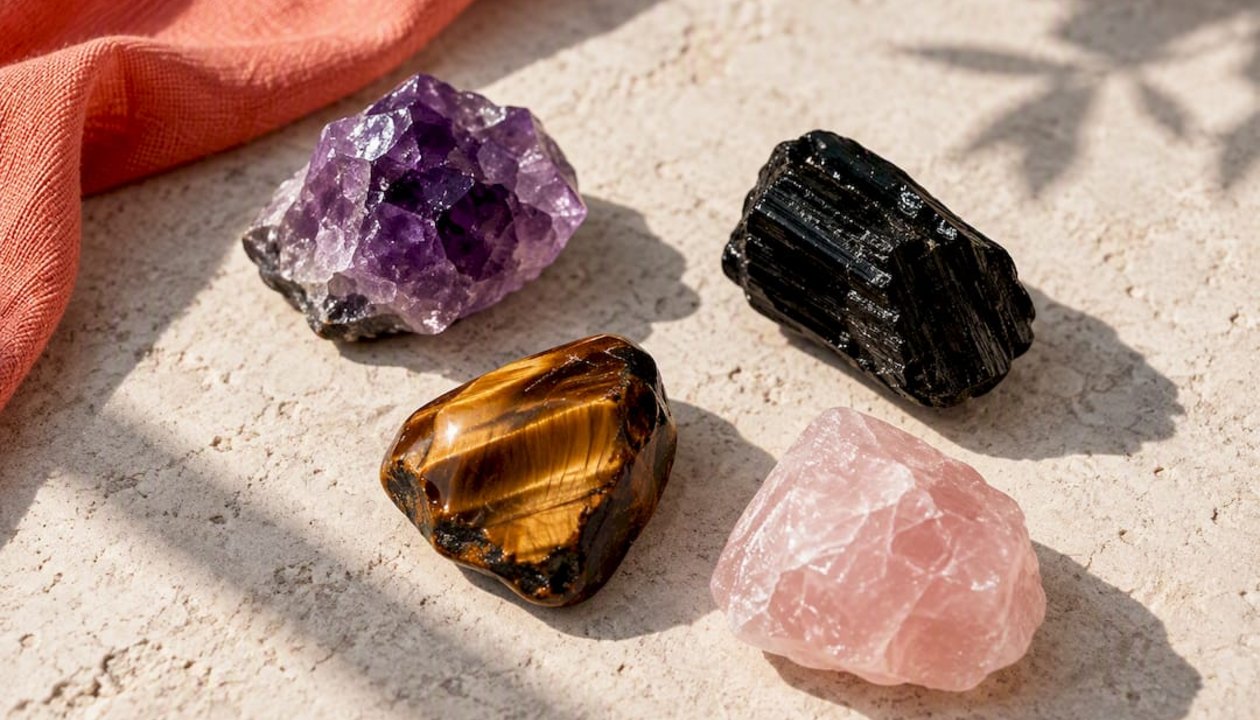
One common misunderstanding is worth clearing up. In the traditional, strict classification, only diamond, ruby, sapphire and emerald count as precious stones. Most of what you’ll find in silver jewelry is usually called semi-precious, but in everyday language — and in this article — we treat both groups together. What matters isn’t the label but whether the stone can keep up with your lifestyle and whether you’ll actually enjoy wearing it.
How to choose one gemstone: four criteria before symbolism
1. Everyday durability
A piece meant to go everywhere with you has to stand up to scuffs. This is where the Mohs scale helps — a ten-step scale of mineral hardness. Household dust and sand contain particles with a hardness of about 7, so stones rated 7 and above, such as agate or chalcedony, keep their polish for a long time. Labradorite (6–6.5) is a little more sensitive, while turquoise, lapis lazuli, coral, malachite and amber are best worn in moderation. You’ll find the details in our guide to the Mohs hardness scale for jewelry stones.
2. Color for your skin tone and wardrobe
Your one stone should go with most of your clothes. Purple looks good with gray, navy, white and black, and black goes with practically everything. If your skin has a cool undertone, purples, pinks and the cool flashes of labradorite look best; with a warm undertone, earthy colors such as green agate, coral or amber. Silver is your ally here: the cool metal brings out clean, cool stone colors.
3. Form — ring, pendant or earrings?
A ring rubs against everything you touch, so choose a “forever” ring only with a hard stone. The same goes for a bracelet, which often bumps against a desk or keyboard. Pendants and earrings are less exposed to knocks and keep the color close to your face — the best form if you want the piece to flatter your complexion. If you can have only one, a pendant is the most versatile: it works with a sweater, a shirt and a dress.
4. Symbolism — last, but not unimportant
Once you know what will survive your day and suits your style, pick from the shortlist the stone whose meaning feels closest to you. Some people follow the tradition linked to their zodiac sign or birth month; others choose what they want the piece to remind them of: calm, strength or love. That gives the choice a personal dimension, too.
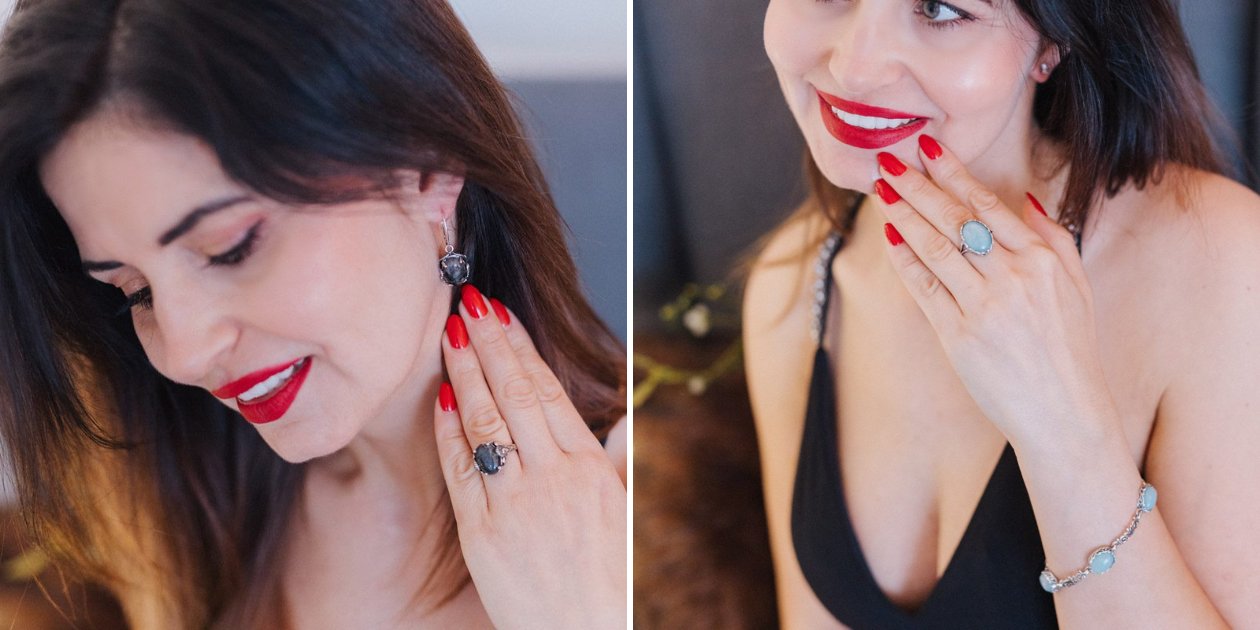
Four gemstones for jewelry you’ll wear for years — short profiles
Amethyst — a purple linked with calm
Amethyst is the purple variety of quartz — a natural, hard stone (7 on the Mohs scale) that copes well with daily wear, even in a ring. Its only weakness is strong sunlight: left on a windowsill for long periods, its color can fade. Tradition sees it as a calming stone, a symbol of balance and moderation. The ancient Greeks believed that, worn as an amulet, it helped keep a clear head — hence the name, from the Greek word for “not intoxicated.”
Onyx — the black stone of strength in tradition
This deep black stone, glossy once polished, is a variety of chalcedony and a close relative of agate. With a hardness of 6.5–7, it handles everyday wear well, and black goes with any outfit, from jeans to jewelry for a little black dress. Traditionally it’s associated with strength and composure, and some people like to wear it as a personal talisman for tougher days. It’s also a popular choice among men. Tradition gives black tourmaline a similar role, and if you prefer a warm golden-brown, tiger’s eye is an alternative.
Labradorite — a play of color and the stone of intuition
Labradorite is a feldspar mineral that flashes blue, green and gold when you tilt it at the right angle — an effect called labradorescence. It’s named after the Labrador Peninsula in Canada, and an Inuit legend says the northern lights were once trapped in the rocks there. Traditionally it symbolizes intuition and imagination. It has a hardness of 6–6.5 and distinct cleavage, so treat it gently in a ring and avoid knocks. Labradorite rings are among our customers’ favorites — gray with a blue flash works with denim and with elegant navy alike.
Rose quartz — a soft pink and relationships
This milky pink, translucent stone is also a natural variety of quartz. It has a hardness of 7 and, like amethyst, dislikes long exposure to strong sun. Tradition calls it the stone of love: it symbolizes tenderness, harmony and good relationships with others, as well as kindness toward yourself. Its delicate color looks lovely against fair skin and with beige, gray and pastels. It’s a frequent gift for a mother, a friend or a loved one.




Comments (0)