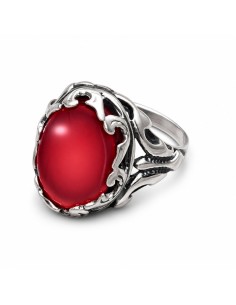
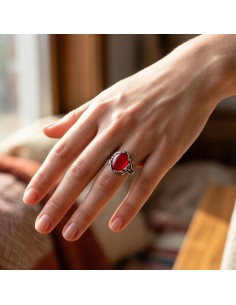
In short: Dyed agate is natural agate that has been given an intense color through treatment — the color changes, not the stone. It is a traditional, widespread practice, not a scam, as long as the seller discloses it. Bright fuchsia, neon blue or purple almost always mean the stone has been dyed, while grays, beiges, browns and milky bands are usually natural color.

Agate can be milky white, gray, green, rusty red or a juicy pink. When you see an intense fuchsia stone in a store, it’s fair to ask whether it’s still a real stone. Below we explain what dyed agate is, where the tradition comes from, how to recognize color added by treatment and how to care for this kind of jewelry. At the end we say plainly which agates in our collection have natural color and which have been dyed.

What is agate and where does it come from?

Agate is a variety of chalcedony, a microcrystalline quartz made of crystals too small to see with the naked eye. Chemically it is silica (silicon dioxide). It usually forms in cavities in volcanic rock, where thin layers are deposited one after another over a very long time — hence its banded, striped pattern. Some agates also hold quartz crystals inside. With a hardness of 6.5–7 on the Mohs scale, it holds up well in rings and bracelets.

Held up to the light, some bands look almost transparent, others milky. A single slice can show several colors, and the bands form irregular patterns, so two specimens rarely look alike. Large deposits are found in Brazil, Uruguay, India and Mexico, among other places; in Poland, agates turn up in Lower Silesia.

The name comes from the Achates River in Sicily, where — according to Theophrastus — these stones were found. In antiquity agate was worn as an amulet, and layered specimens were carved into cameos and intaglios for signet rings. It is sometimes called a semi-precious stone, although that division is a convention — the trade often simply speaks of gemstones or decorative stones. Traditionally, agate is regarded as a stone of balance. That symbolism belongs to the stone, not to its color — and it is symbolism, not a health promise.

Some varieties of agate have a striking natural color (more about them in our article Agate in over 100 varieties):

  • Green “moss” — moss agate is translucent, with green inclusions that look like moss.
  • Branching patterns — dendritic agate shows dark, branching, fern-like markings on a light background.
  • Rainbow sheen — fire agate shimmers beneath its brown surface thanks to thin layers of iron oxides.
  • Several colors at once — Indian agate can be multicolored, with greens, reds and yellows in one specimen.
  • Pastel blue — naturally blue agate usually has a light, delicate shade.

Is dyed agate still a natural stone?

Yes. Treatment doesn’t change the stone’s composition, structure or hardness — it is still the same mineral. The color changes, not the stone. The dye gets in thanks to porosity: there are tiny pores between the microscopic quartz fibers, and successive layers absorb the solution to different degrees. That’s why the banded pattern remains, and the dye often even emphasizes it.

Spotting dye

Natural or Dyed Agate?

ColorNatural agate: muted, earthy tonesDyed: intense, unusual
BandsNatural bands vary in shade and saturationDyed: one tone, lighter or darker
CracksDye collects in fissures and shows as darker linesCheck under a loupe
ShadesFuchsia, cobalt blue, neon greenAlmost always dyed
DescriptionAn honest shop states any treatmentAsk the seller

Mineralogically it is still a natural stone, not an imitation — that term applies only to glass or plastic made to look like agate. A synthetic stone, grown in a laboratory, is something else again. We sort out these terms in our guide Natural, synthetic or reconstructed stone — what does each word mean? The real difference lies in collector value: specimens with a rare natural color are valued more highly, while dyed ones are more accessible.

How agates get their color — the Idar-Oberstein tradition

Enhancing the color of stones has a long history, but dyeing agate on an industrial scale took off in the 19th century in Idar-Oberstein, Germany — a town famous for centuries for its agate-cutting workshops. When the local deposits ran out, the workshops began importing rough from South America — often gray and unremarkable, but good at absorbing color. The classic methods rely on simple chemical reactions inside the stone’s pores:

  • Black — soaking in a sugar or honey solution, then a bath in sulfuric acid, which carbonizes the sugar in the pores. This color is very durable.
  • Red and brown — iron salts and heating. This produces the same iron oxides that create rusty shades in nature.
  • Blue and green — iron compounds (Prussian blue) or chromium compounds.
  • Pink, fuchsia, purple — usually modern organic dyes: saturated, but the least resistant to sunlight.

Color is usually added to slabs, slices or beads, because the solution penetrates a thin piece more evenly. A stone intended for jewelry is then cut and polished. Brightly colored agate slices sold as home décor are almost always the result of this kind of treatment.
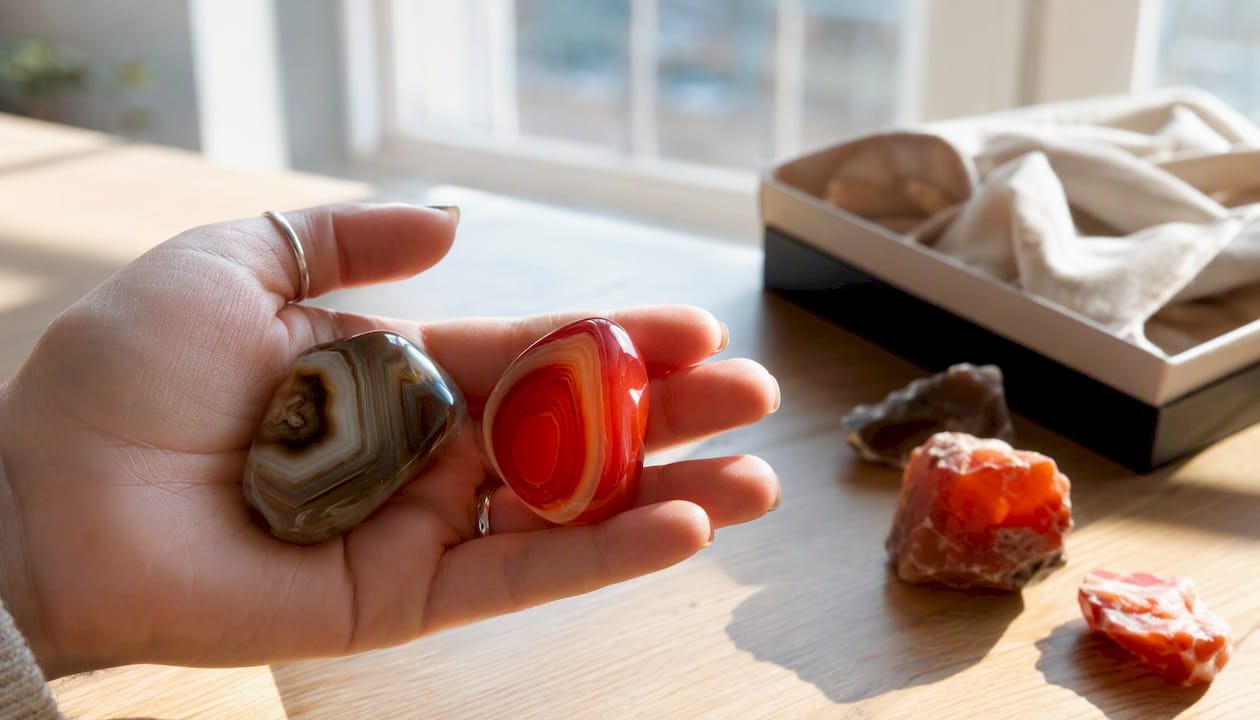
Natural-color agate and intense red agate — polished stones held in a hand

Agate colors — which shades are natural and which suggest dye

In nature, agate is most often gray, white, bluish gray, beige, brown or rusty red. Warm tones come mainly from iron compounds, and greens from traces of other minerals. What matters is not only the shade itself but also how it is distributed through the stone:

ColorWhat it looks like naturallyWhen to suspect treatment
Gray, white, milky, beigeThe most common shades, usually with translucent bandsRarely — this is almost always natural color
Brown, honey, rust, redCaused by iron compounds, with uneven saturationWhen a deep red is identical in every band
GreenOccurs naturally, e.g. in moss agateWhen the green is neon, with no tonal transitions — ask about treatment
BlueA light, pastel blueBright cobalt-blue agate is almost always treated
BlackNearly black bands do occur, though rarelyA uniform, deep black with no banding is most often added by treatment
Pink, fuchsia, purpleAt most a pale, powdery pink or a lavender tintSaturated shades virtually always mean the stone was dyed

How to tell if agate is dyed: 6 clues

You can’t always settle the question for sure with the naked eye, but these observations tell you a lot:

  1. Color that’s too even — natural color varies in saturation from band to band. Identical intensity in every layer is a sign of treatment.
  2. Color in the cracks — the solution penetrates deepest into fissures, so under a loupe you’ll see darker “veins” in them.
  3. A trace around the drill hole — in necklace or bracelet beads, color concentrated around the hole gives the dye away.
  4. A color nature doesn’t make — fuchsia, neon turquoise or intense purple don’t occur in agate at that saturation.
  5. The light test — in naturally colored agate, transparent bands alternate with milky ones, while in a dyed specimen the color is often equally dense in every layer.
  6. A description that doesn’t match the look — a neon stone presented as a “rare natural color” is a reason to ask more questions.

Look at the stone in daylight, and when buying online, compare several photos — strong studio lighting can intensify a shade.
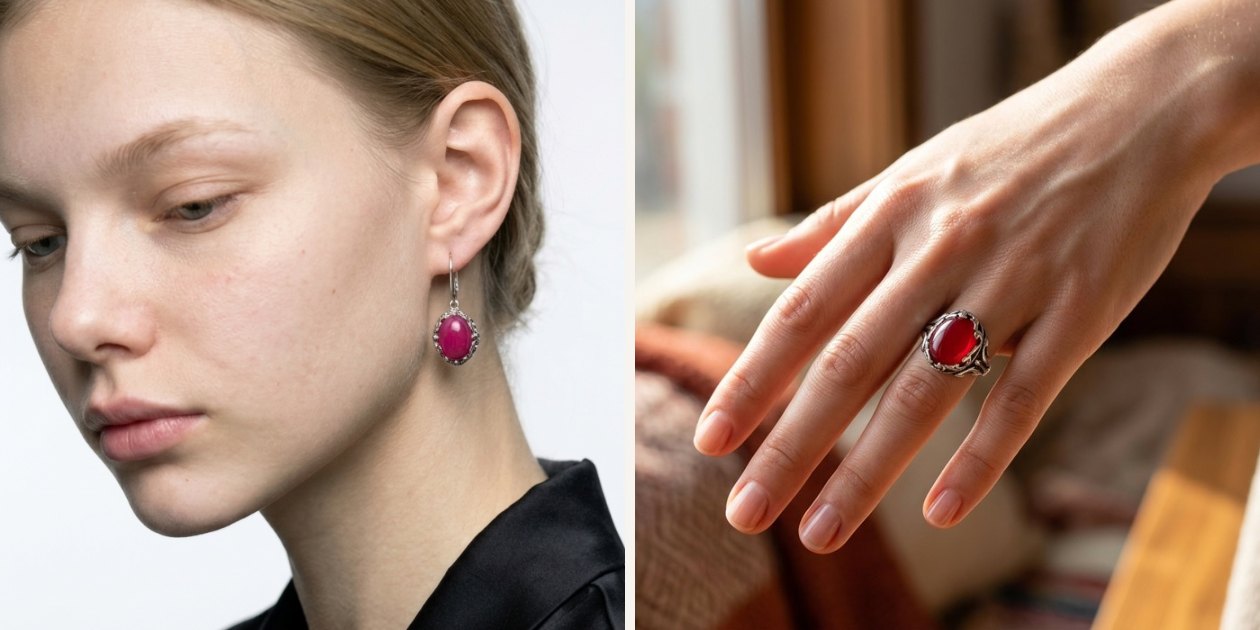
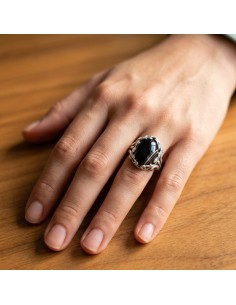
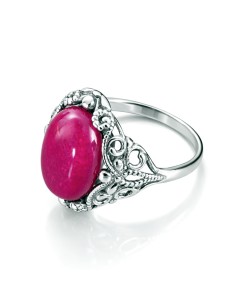
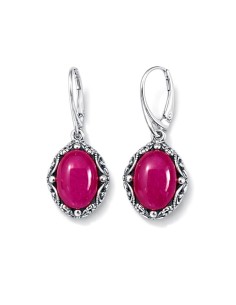
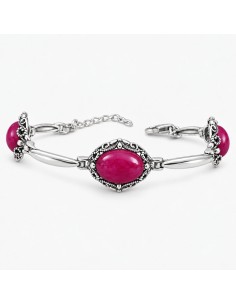
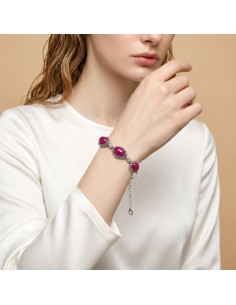
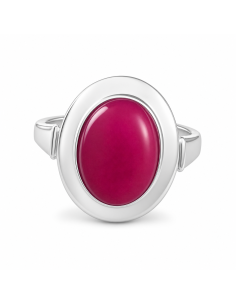
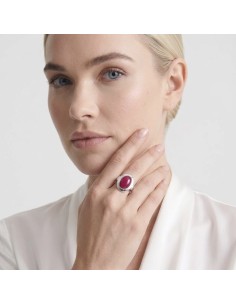
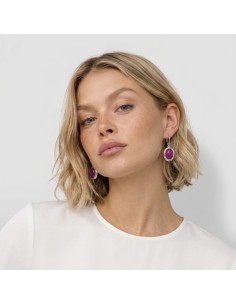
Dyed agate jewelry — fuchsia agate earring on a model and red agate ring on a hand, Polcarat Design

The acetone test? Better not at home

A popular tip is to wipe the stone with a cotton pad soaked in acetone. We don’t recommend this test on finished jewelry: the solvent can damage the dye and protective coatings, and a clean cotton pad proves nothing — color produced with iron compounds or carbon doesn’t rub off. Only laboratory testing gives certainty; for everyday purposes, accurate information from the seller is enough.

Is dyed agate a scam?

No — as long as it is disclosed. Dyeing is a traditional, widespread treatment, and gemstone trade standards recommend telling the buyer about it. The problem starts when a seller hides it or presents a dyed specimen as a stone with natural color. Sellers are expected to describe the main characteristics of their goods accurately, and misleading buyers is an unfair commercial practice. Before you buy, check:

  • The name and description — whether the color and any treatment are stated, and, for synthetic stones, that they are synthetic.
  • The word “natural” — natural agate is not the same as natural color: the stone can be genuine while the color has been added.
  • The seller’s answer — ask directly whether the specimen was dyed. An honest seller will answer without hesitation.

It’s also worth knowing that black onyx on the market is very often agate or chalcedony dyed black. That takes nothing away from its beauty, but the buyer should know.

How to care for agate jewelry so the color lasts

Agate performs very well in everyday jewelry — it is hard and not very prone to scratches. Color added by treatment does, however, call for a little care:

  • Sunlight — don’t leave your jewelry in full sun for long periods, for example on a windowsill. Pinks and purples fade fastest.
  • Chemicals — take off rings and bracelets for housework and before applying creams, perfume or nail polish (nail polish remover often contains acetone).
  • Heat and ultrasound — avoid ultrasonic and steam cleaners, as well as high temperatures.
  • Cleaning — lukewarm water with mild soap, a soft cloth and thorough drying. Don’t dip the stone in silver cleaning solutions.
  • Storage — keep pieces separately, in a pouch or a compartment box, so agate doesn’t scratch softer stones and harder ones don’t scratch it.

You can refresh the silver around the stone with a dry silver polishing cloth; for more tips, read How to care for silver jewelry.

Dyed and natural agate in Polcarat Design silver — how we label it

Polcarat Design is a family jewelry workshop in Rumia, Poland, working since 1984. Our 925 sterling silver jewelry (a nickel-free alloy) is cast and then hand-finished: in the workshop we set the stones, solder, grind, polish and oxidize the silver. We state the stone’s color in each product name and description, and here is a summary of the key facts:

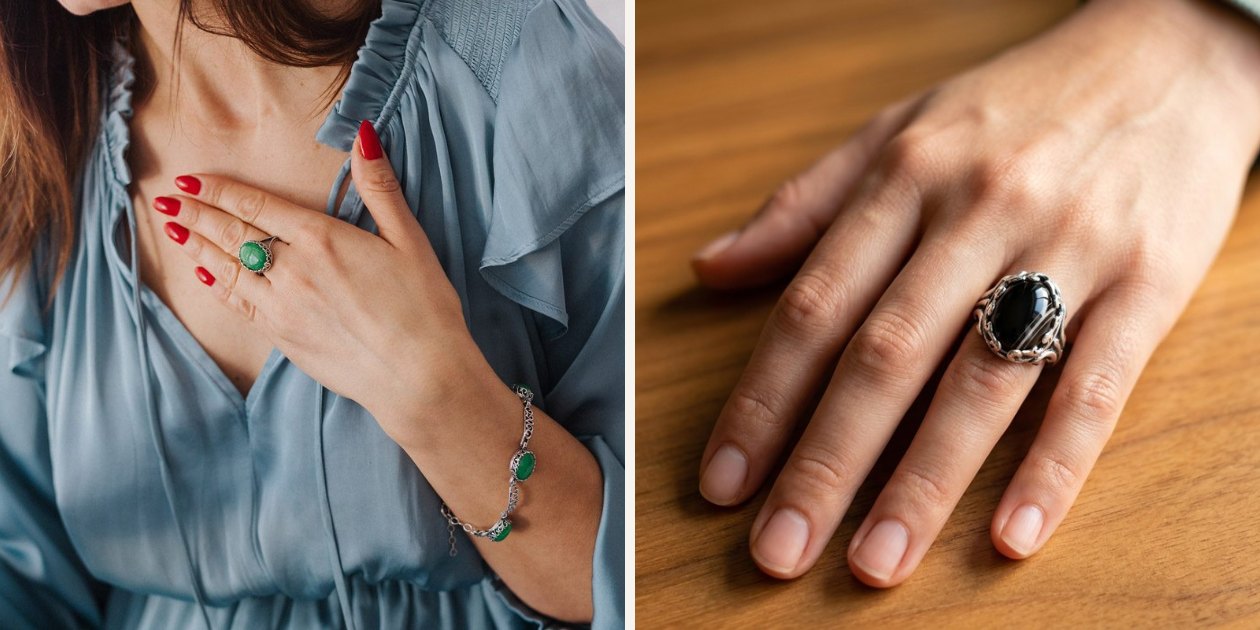
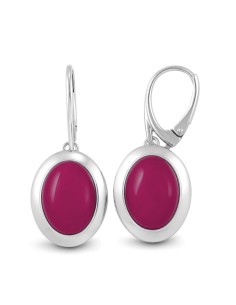
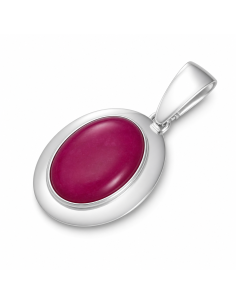
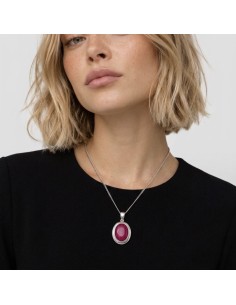
  • Fuchsia and red — the fuchsia (pink) agate and red agate in our collection are dyed natural agate: the stone is genuine, and its intense color was added by treatment.
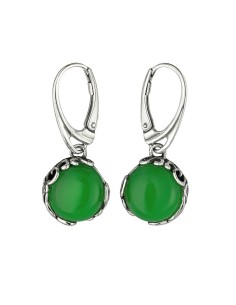
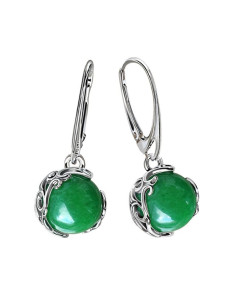
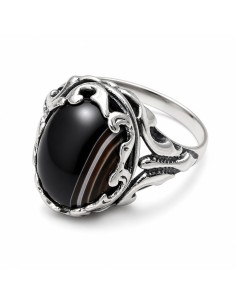
  • Green and black bands — our green agate and black banded agate have natural color.

Our widest choice is in green: we set green agate in rings, earrings, pendants, bracelets and matching sets, often oxidized and openwork. You’ll find fuchsia agate in an openwork ring, earrings, a bracelet and a pendant, among others, while red and black banded agate appear in a large openwork ring. We set the stones by hand, so individual pieces may differ in small details, and the banding is a little different in every stone.

Natural agate color — green agate ring and bracelet and a black banded agate ring, Polcarat Design

You’ll find all our designs in the agate jewelry category, and individual pieces among our silver rings, earrings and bracelets. Why this stone looks so good in silver is covered in our article on the appeal of agate in silver jewelry. If you have a question about a specific design, write to us before you buy.

Dyed agate vs natural: FAQ

Is dyed agate a real stone?

Yes. Only the color changes; the mineral’s composition and structure stay the same. You wear it just like a naturally colored specimen, with a little more care around sunlight and chemicals.

How can you tell natural agate from dyed agate?

Watch for color that’s too even and too bright, darker lines in cracks and color concentrated around the drill hole. The simplest way is to check the product description and ask the seller.

Does dyed agate lose its color?

Black and rusty shades produced by classic methods are very durable. Bright pinks and purples can fade over time if the jewelry often sits in full sun or comes into contact with chemicals.

Is fuchsia agate natural?

The stone is, the color isn’t. In nature this mineral shows at most a pale, powdery pink, so intense fuchsia is virtually always added by treatment.

Is agate a good choice for an everyday ring?

Yes. It rates 6.5–7 on the Mohs scale, so it resists scratches far better than amber or pearl. Just take it off for housework and workouts.

Comments (0)

No comments at this moment
Product added to wishlist