- Silver Jewelry Tips
- 0 likes
- 129 views
- 0 comments
- synthetic opal, natural opal, synthetic opal vs natural opal, how to tell if opal is real, opalite, opal jewelry, lab created opal
In short: when it comes to synthetic opal vs natural opal, the key difference is origin. Natural opal forms in the earth over a very long time, while synthetic opal is made in a laboratory — it has a similar structure of microscopic silica spheres and a similar play-of-color. Natural opal captivates with an unpredictable pattern that differs from stone to stone, and it can be very expensive. Synthetic opal has intense, more regular color, costs less and is somewhat less prone to drying out. Both should be told apart from opalite — ordinary glass that merely imitates opal.
Opal is hard to mistake for any other stone. Its greatest asset is play-of-color: flashes of color that shift as the angle of the light changes. That is why it has been one of the most prized gemstones for centuries and why it keeps inspiring jewelry designers. Today you will find natural stones, synthetic stones and imitations on the market. In this guide we explain how they differ, how to tell if an opal is real and which one to choose for your jewelry.
What is opal? Properties of the gemstone
Opal is amorphous, hydrated silica — unlike quartz or sapphire, it does not form crystals. It usually contains anywhere from a few percent to more than ten percent water, and it rates 5.5–6.5 on the Mohs hardness scale. That makes it harder than calcite or fluorite but noticeably softer than quartz, so it scratches more easily. The name is traced to the Greek word opallios, meaning “to see a change of color.”
Opalescence vs play-of-color: where do the colors come from?
Precious opal is made up of microscopic silica spheres arranged in a regular grid. Light diffracts off them and splits into the colors of the rainbow — an optical effect known as play-of-color. The size of the spheres determines which colors you see: smaller ones produce blues and greens, larger ones oranges and reds. Opalescence, by contrast, is the milky, pearly glow you can see even in stones without any flashes of color.
Types of opal: black, white, fire, crystal and water opal
- Black opal — a dark body tone and intense play-of-color; the rarest and most valuable type
- White opal — a light, milky body with delicate flashes of color
- Fire opal — transparent, in shades from golden to red (yellowish stones are sometimes called golden opal), often without flashes of color
- Crystal opal and water opal — transparent or semi-transparent, with flashes of color that seem to float inside the stone
Most of these stones come from Australia, with other important deposits in Ethiopia and Mexico. Opals with a cat’s-eye effect also occur, though rarely.
What is synthetic opal?
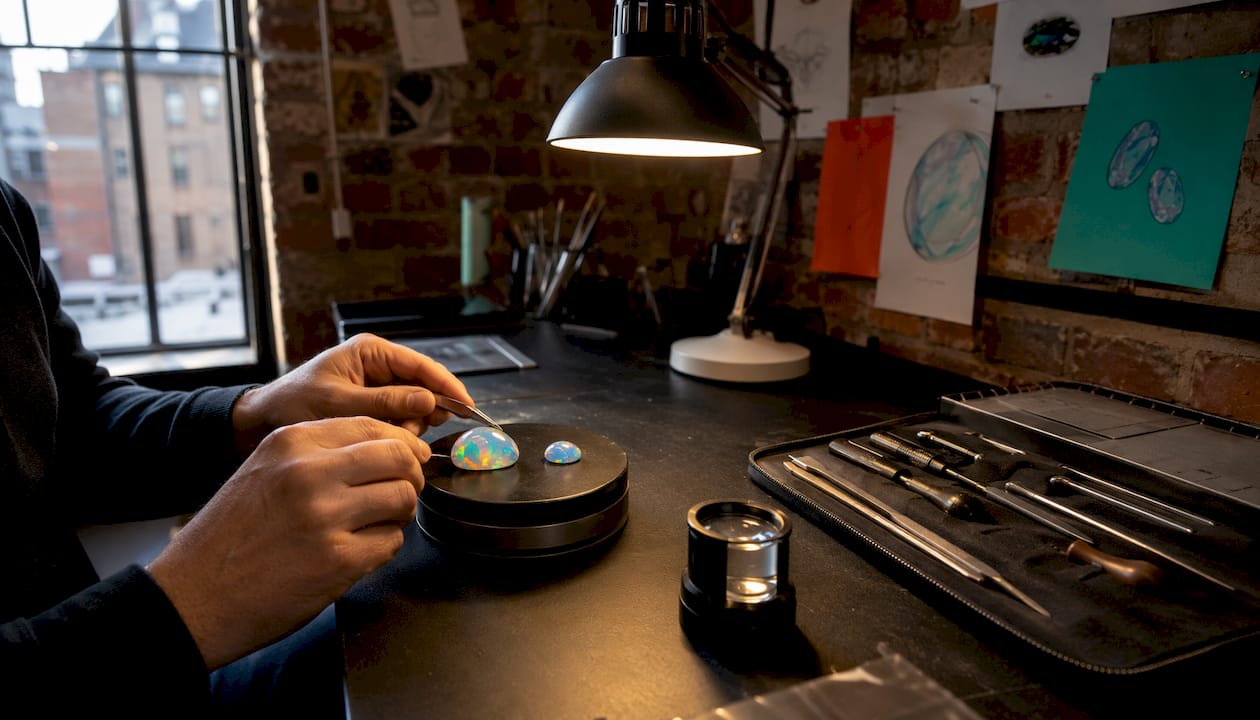
Synthetic opal is a stone created by people under laboratory conditions. The process mimics nature: microscopic silica spheres are slowly settled into an ordered structure and then hardened. The first synthetic opals for jewelry were developed in the 1970s by Pierre Gilson, which is why people still talk about “Gilson opals.” Today they are produced in many varieties, sometimes with added resin for extra strength. They are also easy to cut into even cabochons, which makes them well suited to jewelry made in series.
Synthetic opal looks and is structured much like a natural stone, but a few traits set it apart. Its play-of-color is usually vivid and even, and its pattern more orderly. It contains less water, so it is less likely to crack from drying out. It is also far more affordable and comes in many colors, from blue and green to red and white. That makes synthetic opal a great choice for everyday jewelry — a ring, a pendant or a pair of earrings.
Synthetic opal vs natural opal: side-by-side comparison
| Feature | Natural opal | Synthetic opal |
|---|---|---|
| Origin | Nature; deposits in Australia and elsewhere | Laboratory |
| Play-of-color | Irregular; every stone has its own pattern | Vivid, more regular |
| Water content | Higher; sensitive to drying out | Lower; more stable |
| Cost | Moderate to very high | Much lower |
| Available colors | Depend on the deposit | Wide palette, including rare shades |
| Best for | Collectors, investment pieces | Everyday jewelry and gifts |
Opal guide
Natural vs Synthetic Opal
Natural opal
- Forms in the earth over a very long time
- Unpredictable play-of-color that differs stone to stone
- Higher value, and a higher cost
- A gemological examination confirms what it is
Synthetic opal
- Lab-grown, with a similar silica-sphere structure
- More regular, predictable pattern of color
- Easier to find and more affordable
- No mining involved
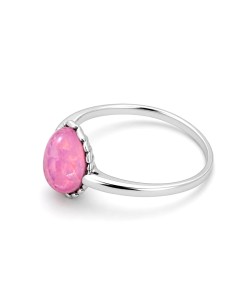
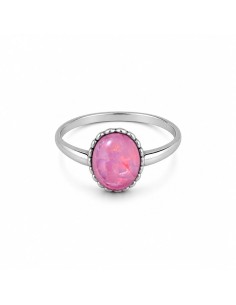
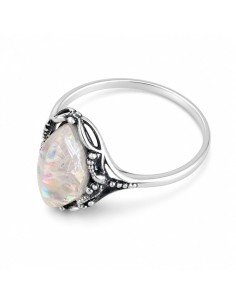
All opals in the Polcarat Design collection are synthetic.
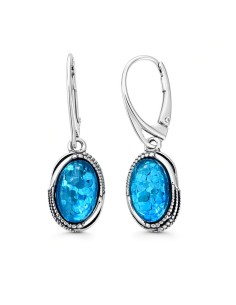
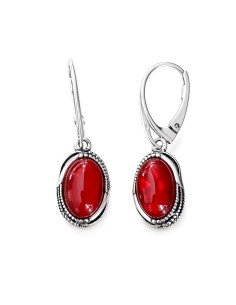
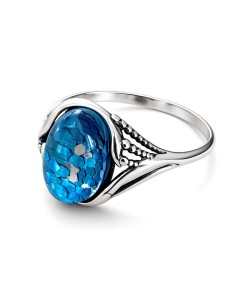
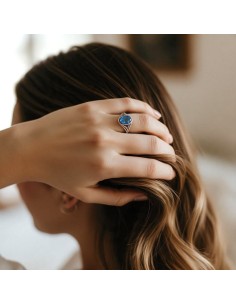
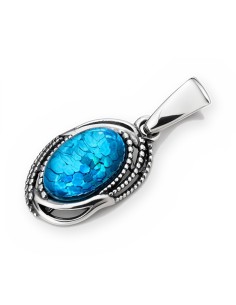
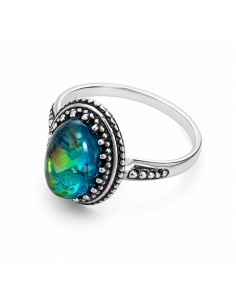
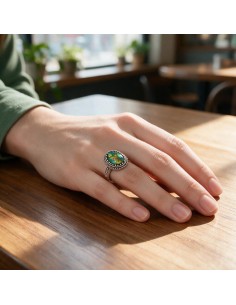
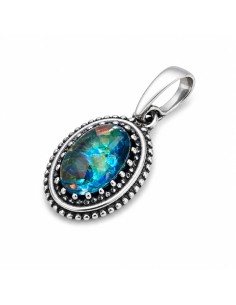
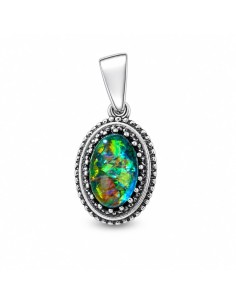
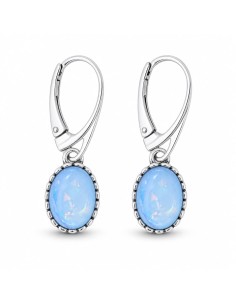
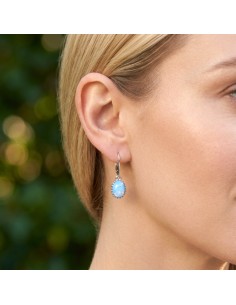
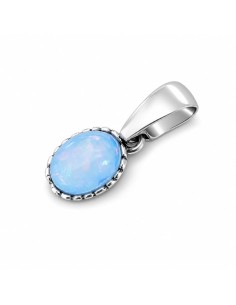
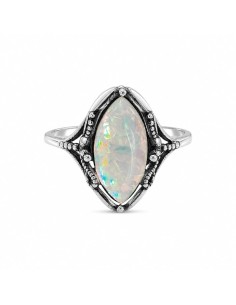
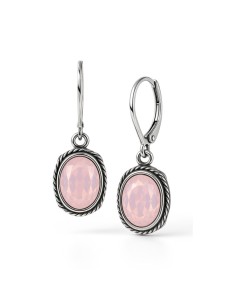
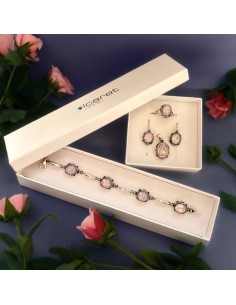
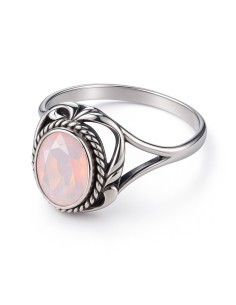
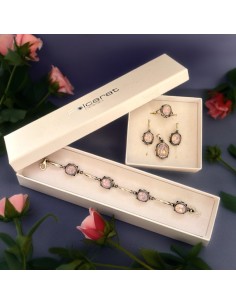
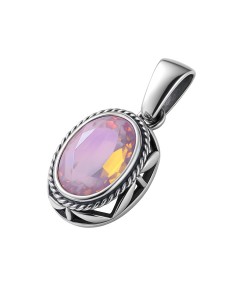
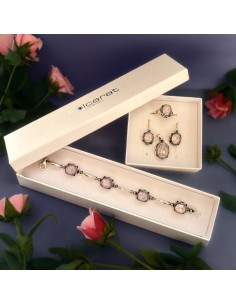
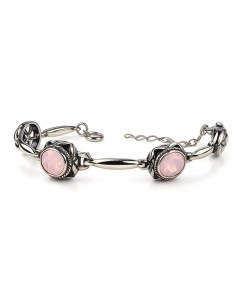
Below are designs from our workshop — 925 sterling silver, mostly oxidized.
How to tell if an opal is real — and spot a synthetic one
Identifying a genuine opal can be tricky: true play-of-color is hard to fake, but good synthetics come very close to natural stones. A few tips will help you assess a stone:
- Examine the stone under magnification. A synthetic often shows a very regular pattern of color patches that resembles scales or a honeycomb. In natural opal the patches of color are irregular, and you may sometimes spot a tiny inclusion — a speck of another mineral trapped inside the stone.
- Move the stone in the light. Some natural opals show color only at certain angles, while synthetics usually flash color from every side.
- Check the sides of the stone. A doublet is a thin layer of opal glued to a dark backing, and a triplet adds a clear cap of quartz or glass on top. A glue line on the side gives the construction away.
- Pay attention to weight. Natural opal has a low density, and synthetics containing resin can be lighter still.
- Have a valuable stone tested. Only a gemological examination gives you a definitive answer.
Tip: the word “opal” alone in a jewelry description is not enough. An honest seller will tell you whether the stone is natural, synthetic or a doublet.
Opalite, doublets and other imitations: what opal is not
Opalite is not synthetic opal but glass (less often plastic) made to imitate it. It has a milky color with a bluish or pinkish glow, but no true play-of-color — the sheen does not change color as you turn the stone. Opalite often ends up in inexpensive jewelry and is sometimes sold under misleading names.
Opal also should not be confused with moonstone. Moonstone has a bluish, floating glow but shows no flashes of color. An alternative like that can look lovely — as long as it is labeled honestly.
Natural or synthetic opal: which should you choose for jewelry?

The choice depends on what you expect from the stone. Natural opal is a good pick for collectors and for anyone who values a stone’s story — the pattern of each natural stone is its own, but it is an expensive gem that needs careful handling. Synthetic opal works better in everyday jewelry: its color is vivid, it is more stable and it costs less, so it is easier to put together a matching ring, necklace and earrings from the same series.
In oxidized silver, an opalescent stone is a beautiful fit for vintage-style jewelry, while in bright, polished silver it looks lighter and more modern. Keep in mind that opal is only moderately hard: a ring worn every day is more exposed to knocks than a pendant or earrings.
How to care for opal jewelry
- Protect the stone from knocks and sudden changes in temperature.
- Don’t use ultrasonic cleaners or harsh cleaning products — a soft cloth and lukewarm water are all you need.
- Take opal jewelry off for household chores, swimming and the sauna.
- Store it separately so that harder stones, such as quartz, can’t scratch its surface.
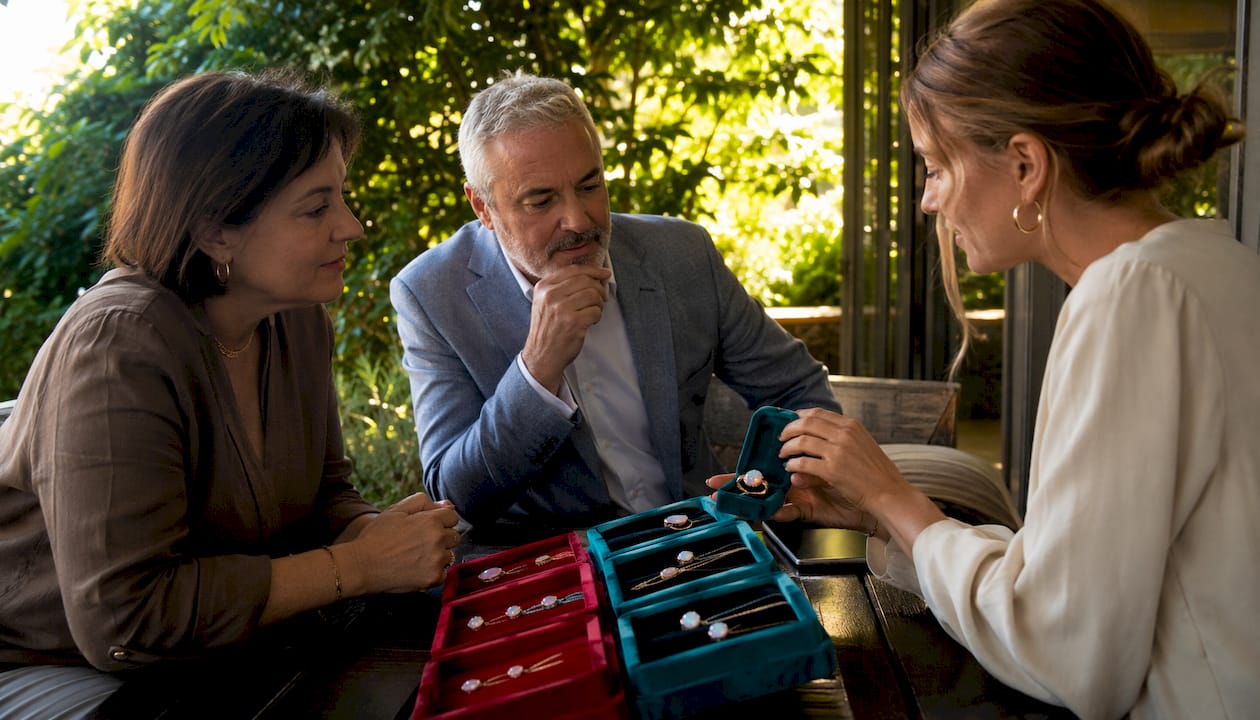
Opal jewelry from Polcarat Design
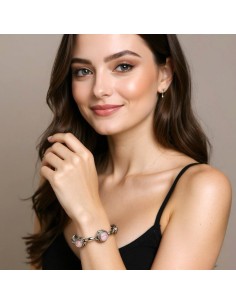
In our family jewelry workshop in Rumia, Poland, we have been making 925 sterling silver jewelry since 1984 — cast and then hand-finished. We will say it plainly: all the opals in our collection are synthetic. We choose them for their vivid color, which looks beautiful in openwork oxidized settings. You will find them in our 2173, 2171, 2168 and 2115 series (in the 2115 series we call them opalescent crystals). See all the designs in our synthetic opal jewelry category, and read about the superstitions surrounding this stone in our article Is opal bad luck?
FAQ: synthetic and natural opal
Is synthetic opal real opal?
Yes — it has a similar structure and genuine play-of-color, but it was formed in a lab rather than in nature. It is not an imitation, unlike opalite, which is glass.
How can you tell synthetic opal from natural opal?
Synthetic opal usually has a very regular pattern of color patches that flash from every angle. Natural opal has an irregular pattern and often inclusions. Only a gemological examination gives you certainty.
What is the difference between opal and opalite?
Opal, whether natural or synthetic, is silica with play-of-color. Opalite is glass or plastic that merely imitates it: it has a milky glow but no flashes of color.
Does lab-created opal lose its color?
No. The flashes of color in synthetic opal come from its structure, not from a dye, so they do not fade. It is still worth protecting the stone from knocks, chemicals and scratches.
Does Polcarat Design use natural opals?
No. All the opals in our collection are synthetic, set in 925 sterling silver, most often oxidized.
Comments (0)