In short: the key types of necklace chains are anchor, curb, figaro, Singapore, snake, rolo, box, ball, foxtail and king chain. For everyday wear, compact styles such as curb and anchor chains work best. For a gemstone pendant, choose a chain that fits through the bail and can carry the weight of the stone — save the most delicate styles for small, light pendants.
The same silver chain can look understated or very bold — it all depends on how its links are joined. Types of necklace chains differ in the shape and arrangement of their links, and therefore in shine, flexibility, durability and the way the chain lies on the neck. Below we describe the most common chain styles, compare them in a table and explain how to match a chain to a stone, an occasion and your style.
The most popular types of necklace chains and their features
The way the links are joined decides whether a chain is soft and fluid or compact, high-shine or subdued.
Anchor (cable) chain — an everyday classic
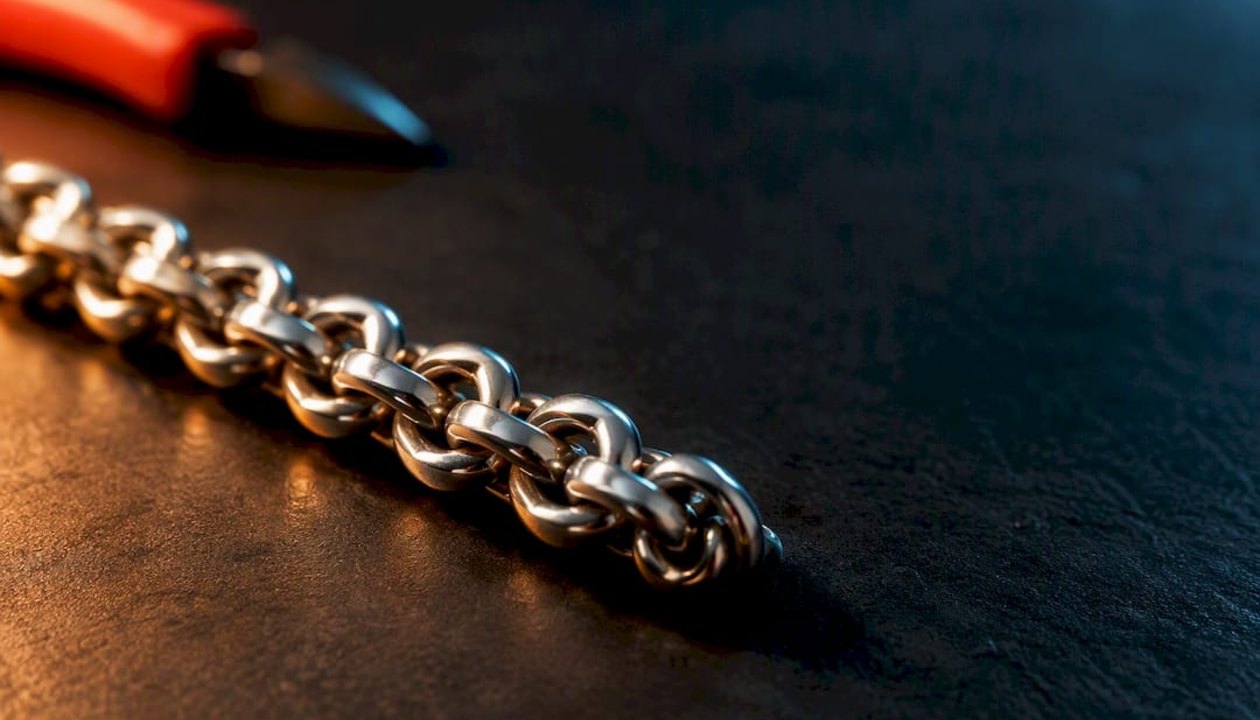
The anchor chain, also known as a cable chain, is one of the oldest and most popular styles. It’s made of oval links, each turned 90 degrees relative to the previous one — just like a ship’s anchor chain, which gives it its name. It’s light, versatile and easy to pair with a pendant, which is why it’s often the first choice for everyday wear.
Curb chain — compact and durable
A curb chain is made of oval links that are twisted and flattened so they lie flat and fit snugly together. It sits smoothly on the skin and stands up well to daily wear — it’s one of the most durable chain styles. In a thin version it can handle a small stone; a wider one looks good on its own. The curb chain is also a classic men’s chain.
Figaro chain — a rhythmic pattern
The figaro is sometimes described as a variation of the anchor or curb chain: several short links alternate with one elongated link, most often in a 3 + 1 pattern. This gives the figaro chain a distinct rhythm and makes it more decorative than the classic styles. It looks good on its own — around the neck or as a bracelet.
Singapore chain — sparkles with every move
A Singapore chain is made of small, spirally twisted links. It’s very flexible and shimmers with every movement, because the twisted surfaces reflect light at different angles. It’s a light, feminine style, pretty with or without a small stone. A thin version kinks easily, though.
Snake chain — smooth and flexible
A snake chain looks like a flexible, smooth tube made of tightly fitted segments that resemble snakeskin. It has an even shine, rarely tangles and lets a pendant slide freely. On the other hand, it’s sensitive to bending — don’t coil it tightly or tie it in a knot, because kinks are hard to remove.
Other popular styles
- Rolo — a rolo chain is made of identical round links. It’s simple, sturdy and holds its shape well.
- Box — square links form a compact, geometric pattern with a modern feel that rarely tangles.
- Ball — a ball chain consists of small beads joined by short connectors. It’s a delicate style, just right for a light medal.
- Foxtail — V-shaped links woven into a soft, three-dimensional braid. It’s flexible, elegant and needs no embellishment.
- King chain — a three-dimensional, chunky style made of many interwoven links. Heavy and bold, it’s a typical men’s chain worn on its own.
Necklace chain types compared
Durability ratings are approximate — in practice, a lot also depends on the width of the chain and the quality of the clasp.
| Type | Link structure | Look | Durability | With a pendant |
|---|
| Anchor | alternately turned 90° | classic, light | good | yes, versatile |
| Curb | flattened, lying close together | smooth, compact | very good | yes, even a heavier one |
| Figaro | short links plus one elongated | rhythmic | good | usually worn without |
| Singapore | spirally twisted | high shine | medium, kinks easily | with a small, light one |
| Snake | smooth, flexible tube | even shine | medium, prone to kinks | yes, slides freely |
| Rolo | even, round | simple, bold | good | yes |
| Box | square | geometric | good | yes |
| King | many interwoven links | heavy, three-dimensional | very good | usually worn without |
Women’s and men’s chain styles — what to choose and how to combine them
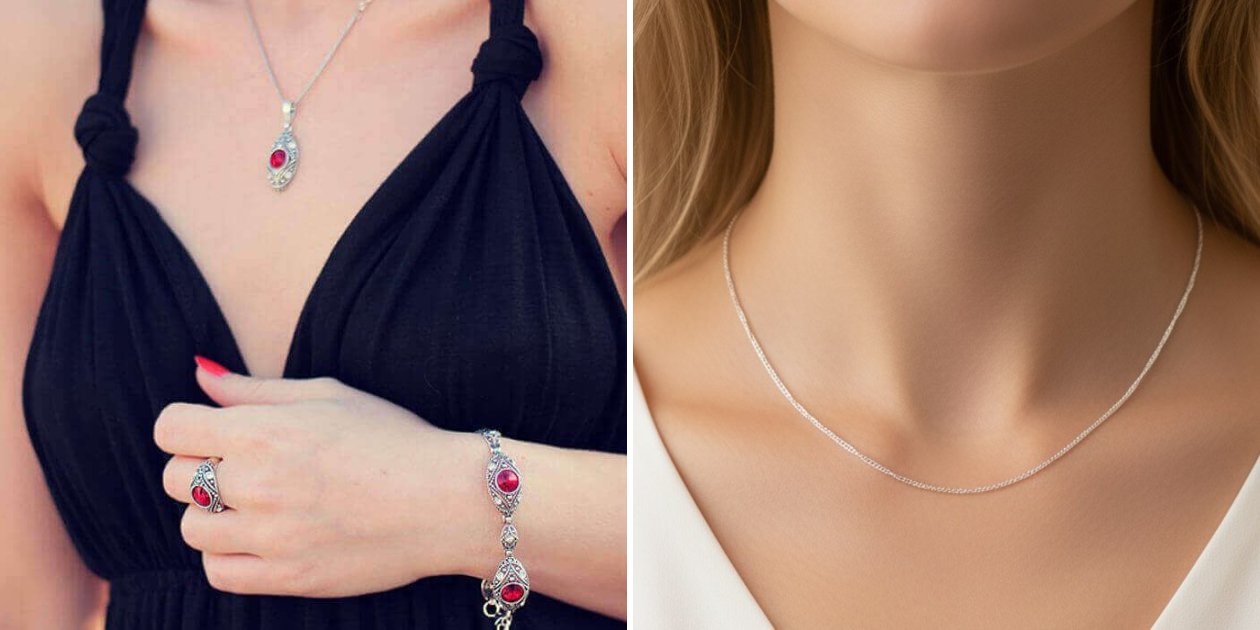
This division is a loose one. Women often reach for lighter, shinier styles such as the snake chain, worn with or without a stone. Men’s chain styles are wider and more compact: curb, figaro, box. A men’s silver chain can be worn on its own or with a medal or a cross. You’ll find more ideas for men in our article on silver jewelry for men.
There’s no single answer to which chain style is the most fashionable — trends change every season, and the classics never go out of style. Layering, though, is popular — wearing several chains at once:
- Different lengths — leave a few centimeters (an inch or two) between them, for example 45, 50 and 60 cm (18, 20 and 24 in), so the layers don’t overlap.
- Different textures — combine a smooth chain with a rhythmic or twisted one; the contrast looks intentional.
- One focal point — in a layered set, one distinct pendant is usually enough, ideally on the middle or the longest chain.
- Compact styles — smooth, compact chains are less likely to tangle with each other.
You can also mix metal colors — we explain how to mix silver and gold in one outfit in a separate guide.
Durability — which chains stand up to everyday wear?
The most durable styles are compact ones in which the links have a large contact surface: curb, anchor and rolo chains. Twisted and smooth styles such as Singapore and snake chains are best treated with care — they’re easier to kink or snag on a sweater. A fine, dense foxtail, in turn, is harder to repair once it breaks.
Durability depends on more than the chain style:
- Width — a wider version of the same style is stronger than the most delicate one.
- Clasp — a lobster clasp is usually more secure and easier to use than a small spring ring clasp. It’s worth checking the clasp and the links right next to it from time to time.
- Silver fineness — 925 sterling silver is harder than pure 999 silver, which is why it’s used for chains meant for everyday wear. We explain more in our article on silver fineness 925, 800 and 999 and what it means.
Take a broken or kinked chain to a jeweler — most damage can be repaired, although smooth styles are harder to fix.






Comments (0)