In short: second-hand jewelry is a great choice when you want the style of a particular era, a piece with history or a good deal – as long as you check the hallmark, the condition of the clasps and stones, and whether a ring can be resized. New jewelry from an artisan workshop gives you a known origin, an accurate stone description, a choice of sizes and the right to return it. It’s usually the better option for gifts and everyday wear.
The resale jewelry market grows every year. We buy vintage because we love things with a story, because we want to shop more consciously and because sometimes there’s simply a bargain. At the same time, many people wonder whether buying used jewelry is safe, how to tell real silver from a fake and whether it’s better to buy new jewelry straight from the workshop. This guide will help you decide without regrets.
Buying second-hand jewelry – pros, cons and price
Used jewelry has plenty of advantages, but also a few traps worth knowing before you buy.
- Pros: styles you won’t find in new collections, a piece with history, often a lower price than new and a smaller environmental footprint, since the item already exists.
- Cons: unknown condition, the risk of a fake or a wrongly described stone, a limited choice of sizes and usually no returns when you buy from a private seller.
On marketplaces, at auctions and in antique shops you’ll find everything from gold diamond rings to silver brooches from decades past, as well as men’s pieces such as signet rings and cufflinks. Prices often follow the weight of the metal in grams rather than the craftsmanship, so real bargains do turn up. Just as often, though, the description is vague or the photos hide damage.
How to buy second-hand jewelry safely – a checklist for silver (925) and gold (585, 750)
- The hallmark. In Poland, silver items over 5 g and gold items over 1 g must carry an official assay mark. Look for the purity mark: 925 or 800 on silver, 585 or 750 on gold. We explain how to read Polish marks in Polish Silver Hallmarks: How to Read Assay and Maker’s Marks.
- The maker’s mark. It tells you who made the piece. Its absence on a large, heavy item is a warning sign.
- Clasps and settings. Ask for close-up photos of the chain clasp, the earring hooks and the prongs holding the stone. A loose stone is easy to lose.
- The stones. Check for cracks, chips and traces of glue. Ask whether the stone is natural, synthetic or reconstructed – we explain the difference in Natural vs Synthetic Gemstones.
- Ring size. Only some designs can be resized. Rings with stones all around the band or with an openwork pattern often can’t be made smaller or larger.
- The seller and terms. When you buy from a private person, you usually don’t get the 14-day right of withdrawal that EU consumers have when buying from an online store. Keep your messages and proof of payment.
If you’re not sure a piece is silver at all, check our guide to silver purity marks, and for a more expensive purchase ask a jeweler for an opinion.
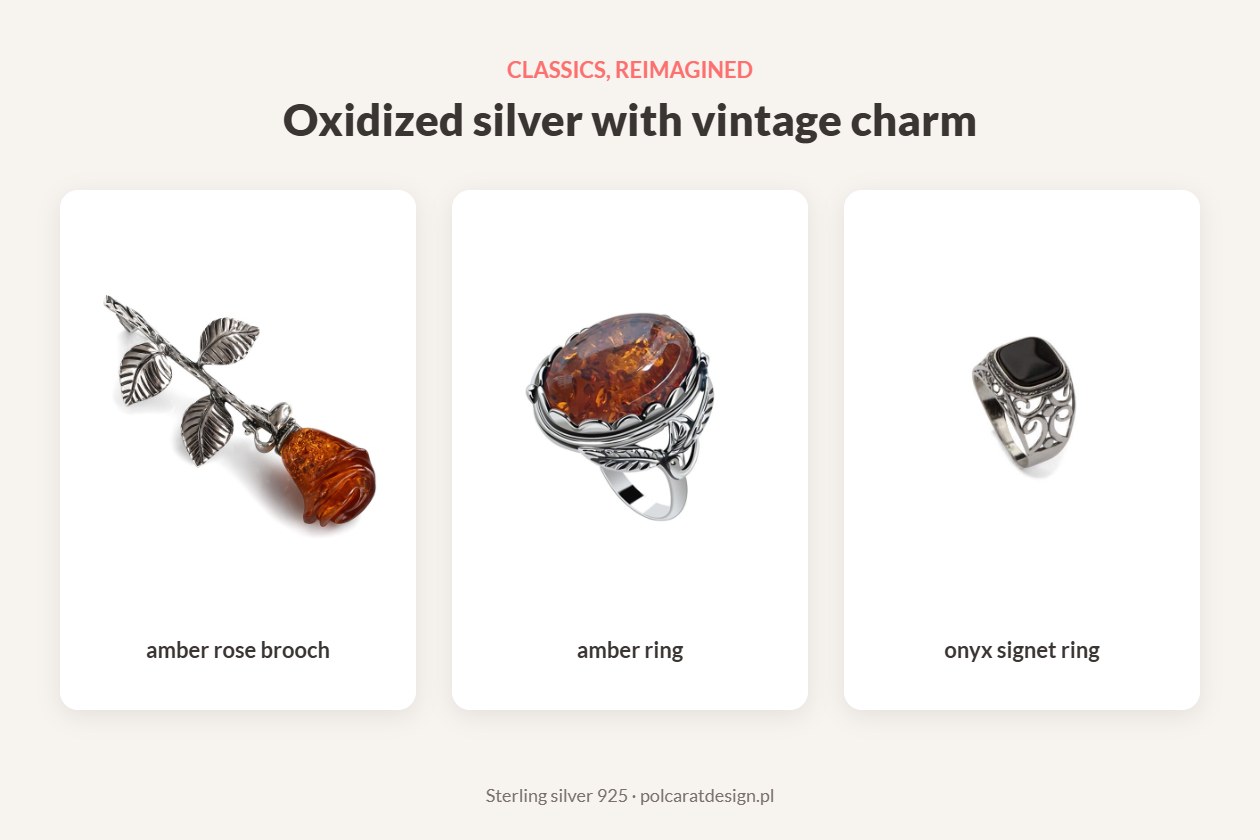
Antique, vintage and retro jewelry – what’s the difference?
These terms are often used interchangeably, but they mean different things:
- Antique jewelry – generally pieces over a hundred years old, for example from the 19th century, the Art Nouveau period or the early 20th century. Antique jewelry has collector value and should come with documented provenance.
- Vintage jewelry – pieces from the last few decades, such as the 1960s or 1980s, made in the distinctive style of their era. Art Deco jewelry from the 1920s and 1930s sits on the border between the two.
- Retro and mid-century pieces – including Polish silver jewelry from the post-war decades, made by state workshops and prized by collectors today.
Jewelry from different eras has a unique character: an exclusive Art Nouveau brooch, a classic Art Deco ring or 1970s pieces with colorful stones are adornments you won’t find in a new collection. That’s why vintage jewelry is so loved by collectors.









Comments (0)