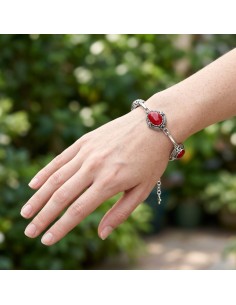
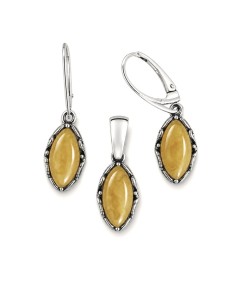
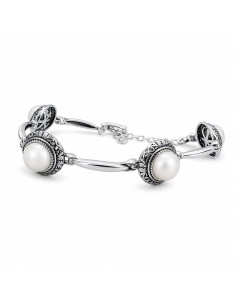
In short: gemstones form through geological processes that take millions of years. Some crystallize from magma deep underground (diamond, topaz, labradorite), others grow from hot mineral-rich fluids in rock cavities (amethyst, agate), some form under intense heat and pressure (ruby, sapphire), and others take shape close to the surface (opal, malachite, turquoise). Amber and pearls are organic. Knowing how stones form explains why no two natural gemstones look exactly alike.

Gemstones have fascinated people for thousands of years. But before a stone ends up in a ring or pendant, its story begins deep in the Earth’s crust. This guide explains in plain language how natural gemstones are formed, where their colors come from and what all of this means when you’re choosing gemstone jewelry.

Precious and semi-precious stones – what exactly are they?

Most gemstones are minerals: naturally occurring substances with a defined chemical composition and an ordered crystal structure. Quartz is silicon dioxide, corundum (the mineral behind ruby and sapphire) is aluminum oxide, and diamond is pure carbon. A stone becomes a gem when it combines three qualities: beauty, durability and rarity.

Diamond is the most valued of all – not only for its hardness but for the rarity of large, clean crystals. Rubies, sapphires and emeralds are prized too, along with rarer stones such as tanzanite and spinel. Every natural gemstone carries its own unique history, and the beautiful crystals a jeweler can cut have captivated people for centuries.

Traditionally, diamond, ruby, sapphire and emerald are called precious stones, while amethyst, topaz, agate, labradorite and tiger’s eye are called semi-precious. Today gemologists increasingly simply say “gemstones”, because the precious vs semi-precious split says little about the beauty of an individual stone. Hardness matters more for everyday wear – learn why in our guide to the Mohs hardness scale for jewelry.

How are gemstones formed? Four ways from inside the Earth

How a gemstone forms depends on temperature, pressure, the presence of water and the available elements. Geologists distinguish four main paths.

1. From magma and lava – diamond, topaz, labradorite

As hot magma slowly cools, minerals crystallize out of the molten mass. The slower it cools, the larger and finer the crystals. This is how topaz, tourmaline and labradorite form – labradorite owes its metallic sheen to its layered structure. Diamonds form even deeper, in the Earth’s mantle at depths of over 150 km, under enormous pressure and high temperature. Violent volcanic eruptions carry them up to the surface.

2. From hot fluids in rock cavities – amethyst, agate, emerald

Hot, silica-rich water circulates through cracks in rock. As it cools, it deposits crystals on the walls. In cavities of volcanic rock this creates geodes lined with amethyst and quartz, and – layer by layer – banded agates. Many emeralds also formed with the help of hot fluids.

3. Under heat and pressure – ruby, sapphire, garnet

When rocks are pushed deep underground, for example as mountains form, heat and pressure transform them into new minerals. This is how rubies, sapphires, garnets and lapis lazuli are born – a process that can take millions of years.

4. Near the surface – opal, malachite, turquoise

Some stones form almost at the surface, when rainwater dissolves minerals and redeposits them in cracks of sedimentary rock. That’s how opal forms, how malachite develops in copper deposits and how turquoise forms in dry climates. These stones are usually softer and need gentler handling.
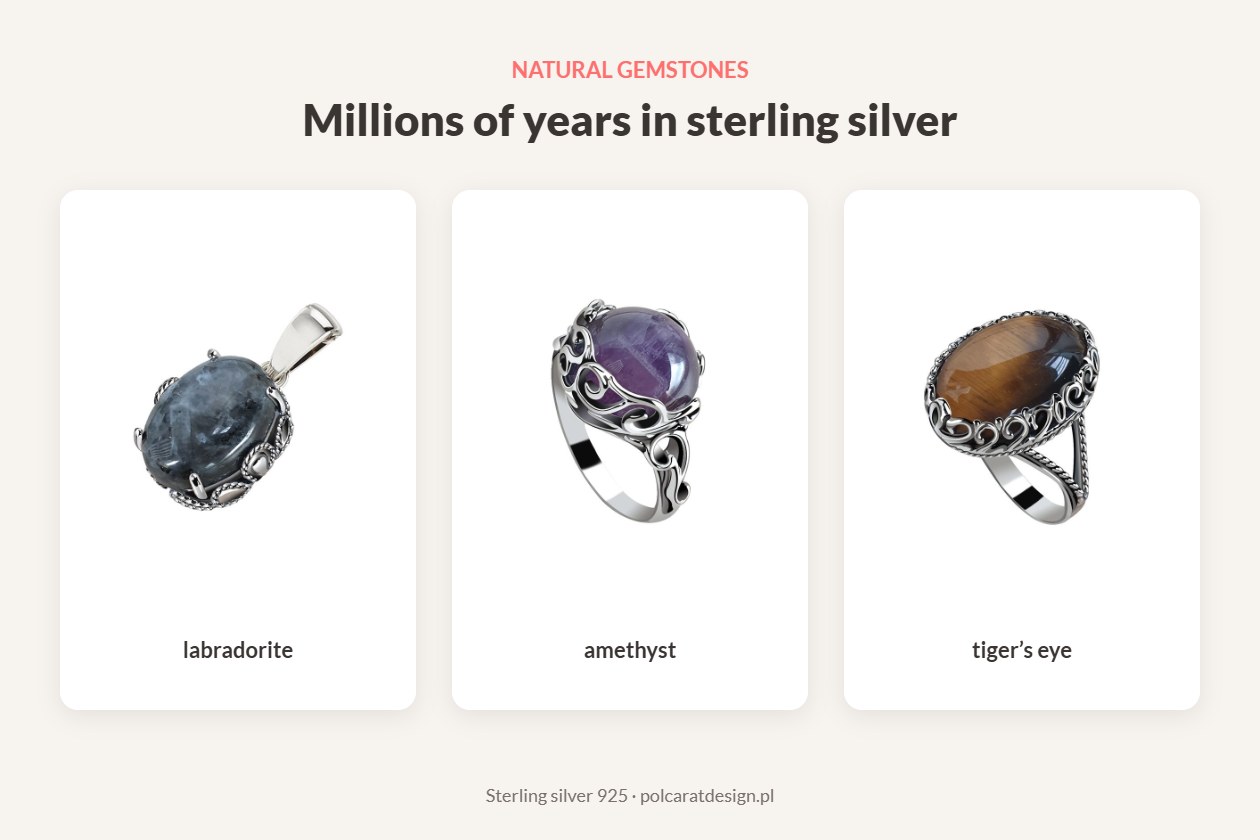
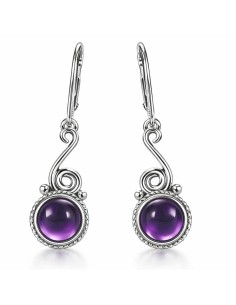
Natural gemstones in sterling silver – labradorite, amethyst and tiger’s eye

Organic gems: amber and pearls

Not every gem is a mineral. Amber is fossilized tree resin tens of millions of years old, and pearls grow inside mollusks that coat an irritant with layers of nacre. These materials are called organic. They’re lighter and softer than most minerals and need different care – see our guide on how to clean amber jewelry.
Where do gemstones get their color?

A stone’s color often comes from trace amounts of elements. The same mineral, corundum, is a red ruby when it contains chromium and a blue sapphire when it contains iron and titanium. Chromium also makes emerald green, and iron in the quartz structure gives amethyst its purple. Pure quartz and pure diamond are colorless.

Some stones owe their look to structure rather than color. Tiger’s eye contains fine parallel fibers that reflect light like silk. Labradorite flashes blue-green because light scatters on thin layers inside it. Agate’s bands record successive stages of the stone’s growth.

What this means when you buy gemstone jewelry

  • Every natural stone is different. Pattern, shade and tiny inclusions record the stone’s history. Two stones from the same collection will never be identical.
  • Inclusions aren’t flaws. In semi-precious stones small inclusions are natural and often add character. For precious stones, value depends on clarity, color, cut and carat weight.
  • Not every stone is natural. You’ll also find synthetic stones, which share the composition of their natural counterparts, reconstructed stones pressed from mineral particles, and imitations made of glass or plastic. We explain the difference in Natural vs Synthetic Gemstones.
  • Some stones are dyed. Dyeing agate is common practice – read more in Dyed agate vs natural agate.
  • The cut matters. Transparent stones are usually faceted, while opaque stones with an interesting pattern are cut en cabochon – a smooth, domed shape.

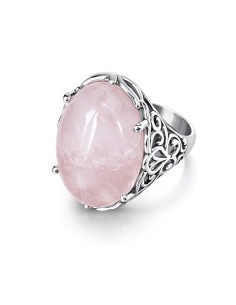
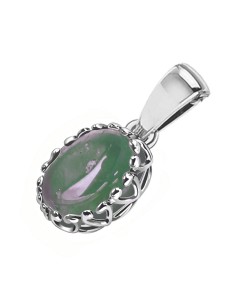
Every product description in our store states whether the stone is natural, synthetic or reconstructed. Our range includes natural amethyst, rose quartz, labradorite, tiger’s eye, hematite and ruby cabochon in the 2125 collection. The opals in our jewelry are synthetic and our malachite is reconstructed.

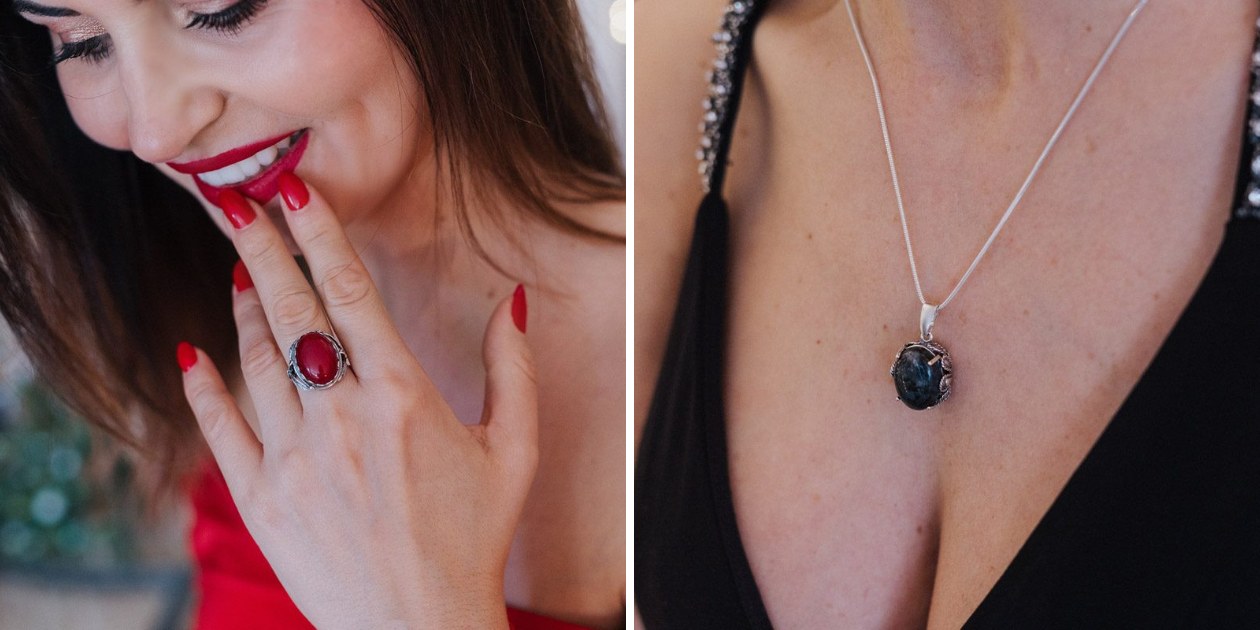
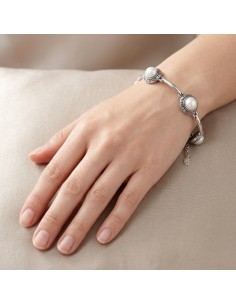
Natural gemstone jewelry worn every day – ruby cabochon and labradorite in sterling silver

A gemstone in a ring is a record of our planet’s history, formed over a span of time we can hardly imagine. Its natural beauty is worth appreciating also because no other stone is exactly the same. If you’d like to wear one every day, browse our sterling silver jewelry with natural gemstones below.

FAQ: how gemstones are formed

How are gemstones formed?

Gemstones form through geological processes: crystallization from magma, growth from hot mineral-rich fluids, transformation of rocks under heat and pressure, or deposition of minerals near the Earth’s surface.

How long does it take for a gemstone to form?

Usually thousands to millions of years. Diamonds used in jewelry are often hundreds of millions, even over a billion years old.

What’s the difference between precious and semi-precious stones?

It’s a traditional division based on rarity and value. Diamond, ruby, sapphire and emerald are considered precious; amethyst, agate, labradorite and tiger’s eye are among the semi-precious stones.

What gives gemstones their color?

Most often trace elements such as chromium, iron or titanium. Some stones, such as tiger’s eye and labradorite, get their optical effects from their internal structure.

Are amber and pearls gemstones?

They are organic materials, not minerals. In jewelry, however, they’re treated as gems and are often set in silver and gold.

Comments (0)

No comments at this moment
Product added to wishlist