In short: mixing silver and gold in one outfit is absolutely fine — it looks great when one color clearly dominates and the other appears at least twice. A linking element ties it all together: a stone, a repeated shape or a two-tone detail. The safest ratio is roughly 70/30; for bolder occasions, try 60/40.

A gold ring inherited from Mom, an everyday silver chain, a wedding band — most jewelry boxes hold both colors. Mixing gold and silver jewelry stopped being a fashion faux pas long ago, but to make the mix look deliberate, it helps to know a few rules. Below you’ll find 7 rules, proportions, tips on gold tones, ready-made pairings and care advice. In full transparency: our workshop doesn’t make solid gold jewelry — our warm tones come from gold-plated pieces — so the advice is universal, and the examples from our range are 925 sterling silver, including gold-plated.

Can you wear gold and silver together?

Yes. The strict rules that said all your jewelry had to be one color — ideally matching your watch — no longer apply. Combining gold and silver is now simply another way to express yourself. There’s one condition: a plan. When two colors land on your neck, wrist and hands with no logic, the result looks random. When one leads and the other repeats in a few places, the same mix reads as a conscious choice. That way you can wear gold and silver jewelry together and never have to shut Grandma’s keepsake away in a drawer just because it’s a different shade from the rest. If you’re still deciding what to wear every day, read our article on precious metals vs surgical steel — which to choose.

Silver and gold jewelry details — close-up of pieces in two metal colors

Rules for mixing gold and silver jewelry — 7 guidelines

Here are the key rules — they work for any occasion, and the first two are enough to get you started.

  1. Choose a lead color — it should make up most of the look, for example a necklace, bracelet and ring in the same tone.
  2. Repeat the second color at least twice — a single detail in another color looks like a mistake; two or three details form a pattern.
  3. Match the scale — a delicate chain next to a chunky bangle looks worse than two pieces of similar thickness.
  4. Coordinate the finish — pair shiny with shiny and matte with matte, unless the contrast of textures is intentional, such as an oxidized, darkened setting next to a smooth, gleaming one.
  5. Don’t overdo the number — 3–4 visible pieces are usually enough; beyond that, the mix starts to look overloaded.
  6. Divide the look into zones — neck, wrists and hands can have different proportions, but one zone should lead.
  7. Add a link — a stone, shape or detail that appears alongside both colors.

These rules work with any aesthetic — from minimalism, where simple forms are easy to combine, to openwork, richly ornamented designs. If you’re just learning to mix metals, start with a lead color and repetition.

The link — a stone, shape or two-tone detail

A linking element tells the eye that the two colors met on purpose. Without it, you see two separate looks worn at once; with it, one coherent idea. The link between two metals can be:

  • A stone — the same or a similar shade in both settings. Amber works beautifully: its honey color echoes the warm tone, and it looks just as natural in a pale setting.
  • A shape — a recurring circle, oval or leaf motif in pieces of two different colors.
  • A two-tone detail — a gold-plated pendant on a silver chain, or a watch with a gold-and-silver bracelet.
  • The color of your clothes — navy, black or gray calm the contrast between the two metals and bring order to the look.

With stones, color temperature helps. Cool shades — lapis lazuli, amethyst, chalcedony — harmonize with a pale, cool setting, while warm ones — amber, carnelian, honey browns — come alive in a warm setting. “In-between” stones such as pearl or clear crystal go with silver and gold pieces at the same time. You’ll find more tips in our guide on which gemstone to choose.
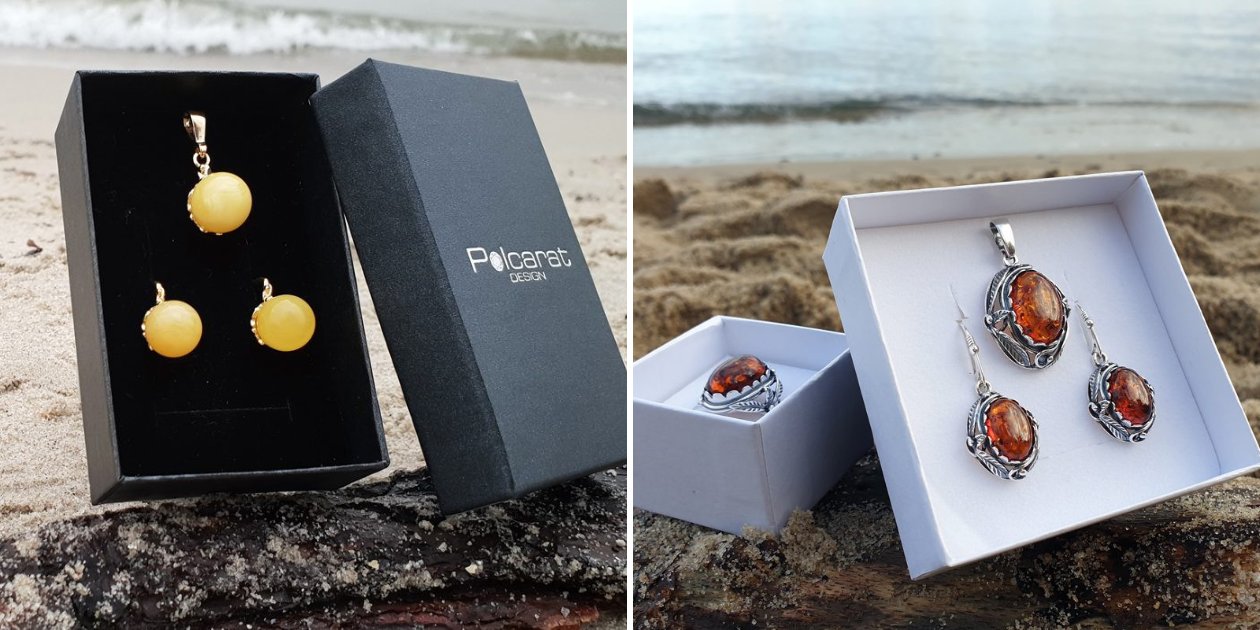
Mixing gold and silver jewelry — gold-plated amber jewelry and a sterling silver amber set in jewelry boxes, Polcarat Design

Gold tones and silver finishes — what goes with what

Each shade behaves differently in a mix:

  • Classic — yellow gold gives the strongest contrast with a cool, pale setting. A good choice when you want the mix to show.
  • Warm and soft — rose gold has more copper in the alloy, so next to a pale setting it looks gentle, without a sharp contrast.
  • Cool — white gold pieces are usually rhodium-plated, so from a distance they resemble rhodium-plated silver. It’s the gentlest bridge between the two colors.
  • Lower fineness — fineness tells you how many parts of pure gold per thousand the alloy contains (585, or 14k, is 58.5% gold). Lower-fineness yellow gold can look paler than 750 (18k) pieces, which makes mixing easier.

Silver has several faces too: polished silver is bright and cool, rhodium-plated silver is whiter and mirror-like, and oxidized silver — darkened in the recesses of the design — contrasts beautifully with a smooth, shiny surface. A rhodium-plated setting and white gold differ only up close, which makes them the safest pairing to start with, while oxidized designs look best next to a rich, warm shade — the contrast of light and dark brings out the ornament. The simplest bridge is gold-plated silver: a warm color on a cool base. We describe the differences in our comparison rhodium plating, oxidizing or gold plating — which finish to choose.

Warm tones usually look better with golden, peachy skin, and cool tones with fair, porcelain skin. That’s a guideline, not a rule — and a gold-and-silver mix has the advantage of suiting almost every complexion. In our range, the golden tone comes from gold-plated jewelry — 925 sterling silver with gold plating, easy to match with what you already have in your jewelry box.

Proportions and zones — how to distribute both colors

Proportion decides whether the mix looks subtle or bold. Three formulas are easy to remember:

  • 80/20 — one color plus one or two details in the other. The safest choice for work and everyday wear.
  • 70/30 — a clear dominance of one color, with the second visible in a few places. The most versatile option.
  • 60/40 — both colors almost equal. The effect is strong and needs a link, or the eye won’t know what matters most.

When stacking rings on one hand, stick to the lead color and bring in the second on a separate finger — for example, several silver rings and a gold wedding band. On the wrist, two or three thin bracelets in gold and silver, broken up by one wider piece, work well. Differentiate layered necklaces by length and thickness: a shorter, thin one in one color, a longer, more prominent one in the other. We describe chain styles that layer nicely in our guide to types of necklace chains.

Also choose one focal point — a statement necklace, a signet ring or big earrings — and let the second color be just an accent. This is the most often overlooked rule, and it’s the one that makes the whole look cohesive.

Ready-made gold and silver pairings: everyday, work and evening

The occasion suggests which color should lead. Treat the ideas below as a starting point and adapt them to what you already wear.

OccasionLead colorSecond colorExample pairing
Everydaysilver1–2 warm detailssmall studs and a pendant, a thin gold-plated bracelet, an amber ring
Work, formal dress codeone colorone discreet piecesmall hoop earrings, a gold-cased watch, a smooth ring
Eveninggoldcool contrastgold earrings, a silver necklace with a crystal, a ring with a stone
Vintage styleoxidized silvergold-plated detailsan openwork oxidized ring, a gold-plated locket, amber as the link
Men’s looksilverwatch or signet ringa chain necklace, a warm-toned watch, a signet ring with gold accents

For work with a formal dress code, restraint and simple forms are the way to go — here, a stylish effect comes from quality craftsmanship, not the number of pieces. Evening elegance allows for stronger contrast and more sparkle; you’ll find ideas in our post on jewelry for a little black dress. And if you want to pair earrings and a pendant from different series, see our guide on how to mix and match jewelry without a set.

How to care for mixed-metal jewelry

Caring for silver and gold jewelry differs, because the two materials age differently. Silver darkens over time — it reacts with sulfur compounds from the air, cosmetics and sweat. Higher-karat gold practically doesn’t tarnish, but it scratches easily. On gold-plated pieces the plating is thin and can wear off over time, especially where it rubs against skin and clothing.

  • Store separately — keep each piece in its own pouch or compartment: harder pieces scratch softer ones, and thin chains like to tangle.
  • Clean separately — silver with a special polishing cloth, gold plating with a soft, dry cloth. Don’t clean gold-plated pieces with abrasive pastes or harsh products, as they will wear away the thin layer.
  • Take them off in time — before swimming, cleaning and exercising, and before you apply perfume or cream.
  • Avoid friction — a gold-plated ring worn right next to another one wears faster, so leave a free finger between them.

If nickel doesn’t agree with your skin, check the alloy composition, since some white gold alloys contain it. Our silver alloy contains no nickel.

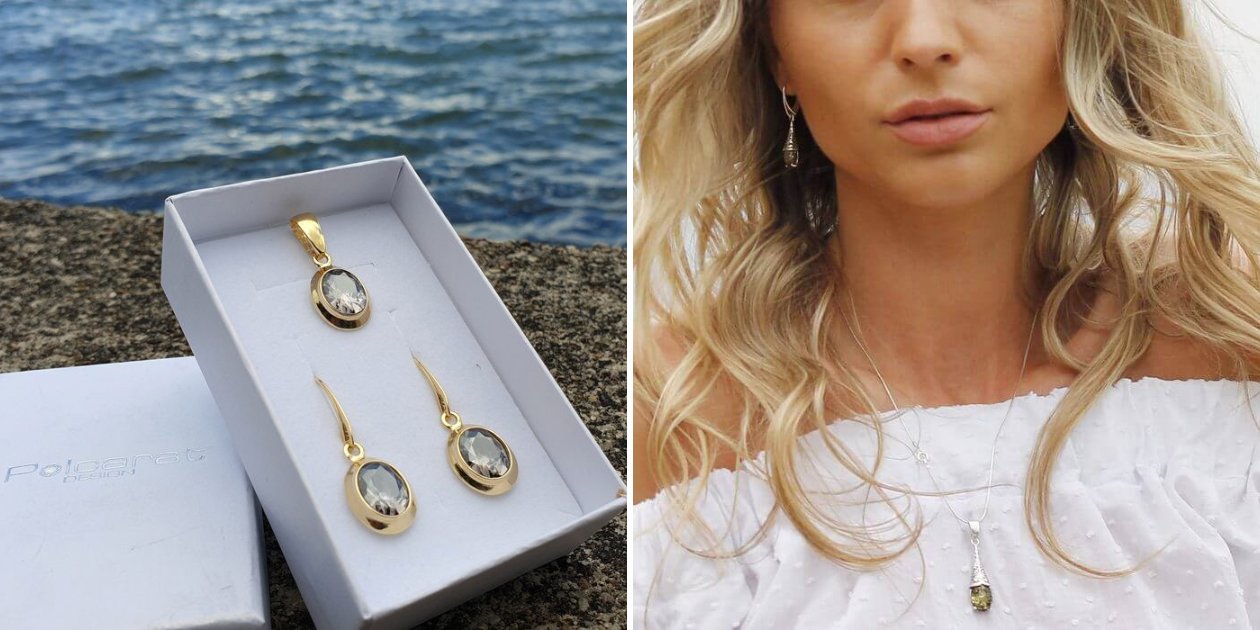
Gold-plated earrings and a crystal pendant in a box, and sterling silver amber jewelry on a model, Polcarat Design

Mixing gold and silver jewelry with Polcarat Design

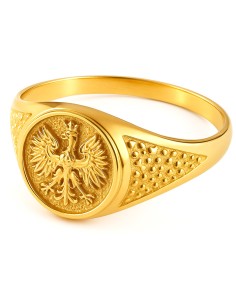
In our family workshop in Rumia, Poland, we have been making 925 sterling silver pieces since 1984 — cast and hand-finished, with stones set by hand. Some designs are oxidized, some rhodium-plated and some gold-plated — the latter are the easiest to weave into a mix with what you already own. Among our gold-plated pendants you’ll find designs with a crystal, an angel and an eagle, and among our signet rings there’s a gold-plated signet ring, too.

The other route is a stone with a warm, golden color. No piece goes with everything, but sterling silver jewelry with amber comes close: amber rings, pendants and bracelets pair easily with your gold jewelry, because amber echoes its tone while the setting stays a cool base.

FAQ: mixing gold and silver jewelry

How many pieces in the second color should I add?

At least two — a single detail looks accidental. At a 70/30 ratio, two or three pieces in the second color are enough, with a link such as a stone or a two-tone detail tying it all together.

Does a gold wedding band go with silver jewelry?

Yes. Add one more small warm detail somewhere, such as a gold-plated pendant or amber, so the band isn’t the only piece of its kind.

Which stone goes with both silver and gold?

Amber, pearl and clear crystals or cubic zirconia are the easiest — they don’t “pick” a side. Cool stones such as lapis lazuli look better in a pale setting, warm ones in a golden setting.

Can you wear gold-plated silver with gold?

Yes, it’s the simplest way to combine silver and gold. Store them separately, though, and don’t clean the plating with abrasive pastes, because the thin layer can wear through over time.

Do silver and gold react with each other on the skin?

Not in everyday wear. The most common issues are scratches from friction and tarnish, so keep pieces made of different metals in separate pouches.

How do you mix silver and gold in a minimalist way?

Go for simple forms: smooth hoops, thin chains, delicate studs. Choose one lead color and add one or two small details in the other.

Comments (0)

No comments at this moment
Product added to wishlist